Vladimir Tatlin

Tatlin was born 28 December 1885-31 May 1953  he was a Russian and Soviet painter, architect and stage-designer. Tatlin became famous as the architect who designed The Monument to the Third International, more commonly known as Tatlin’s Tower , which he began in 1919. With  Kazimir Malevich he was one of the two most important figures in the Soviet avant-garde art movement of the 1920s, and he later became an important artist in the Constructivist movement.

‘Monument to the 3rd international’1920

In 1905 he starts and in 1910 successfully completes his studies at N.Selivestrov Penza Art School in Penza. During the summer vacations he travels to Moscow and St.Petersburg to participate in various art events. In 1911 he resettled to Moscow to live by his uncle and began his art career as an icon painter.
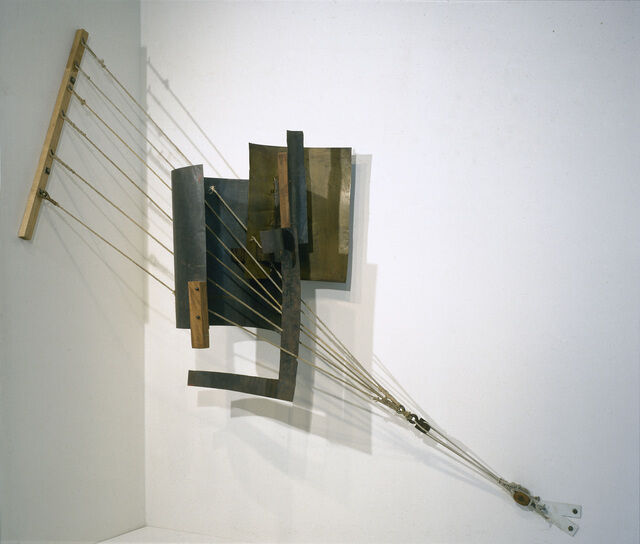
‘Corner Counter Relief’ 1914

Tatlin achieved fame as the architect who designed the huge Monument to the Third International, also known as Tatlin’s Tower. Planned from 1919,the monument was to be a tall tower made from iron glass and steel which would have dwarfed the Eiffel Tower in Paris (the Monument to the Third International was a third taller at 400 meters high). Inside the iron-and-steel structure of twin spirals, the design envisaged three building blocks, covered with glass windows, which would rotate at different speeds (the first one, a cube, once a year; the second one, a pyramid, once a month; the third one, a cylinder, once a day). For financial and practical reasons, however, the tower was never built.

Tatlin was also regarded as a progenitor of Soviet post-Revolutionary Constructivist art with his pre-Revolutionary counter-reliefs, three-dimensional constructions made of wood and metal,some placed in corners (corner counter-reliefs) and others more conventionally. Tatlin conceived these sculptures in order to question the traditional ideas of art, though he did not regard himself as a Constructivist and objected to many of the movement’s ideas.
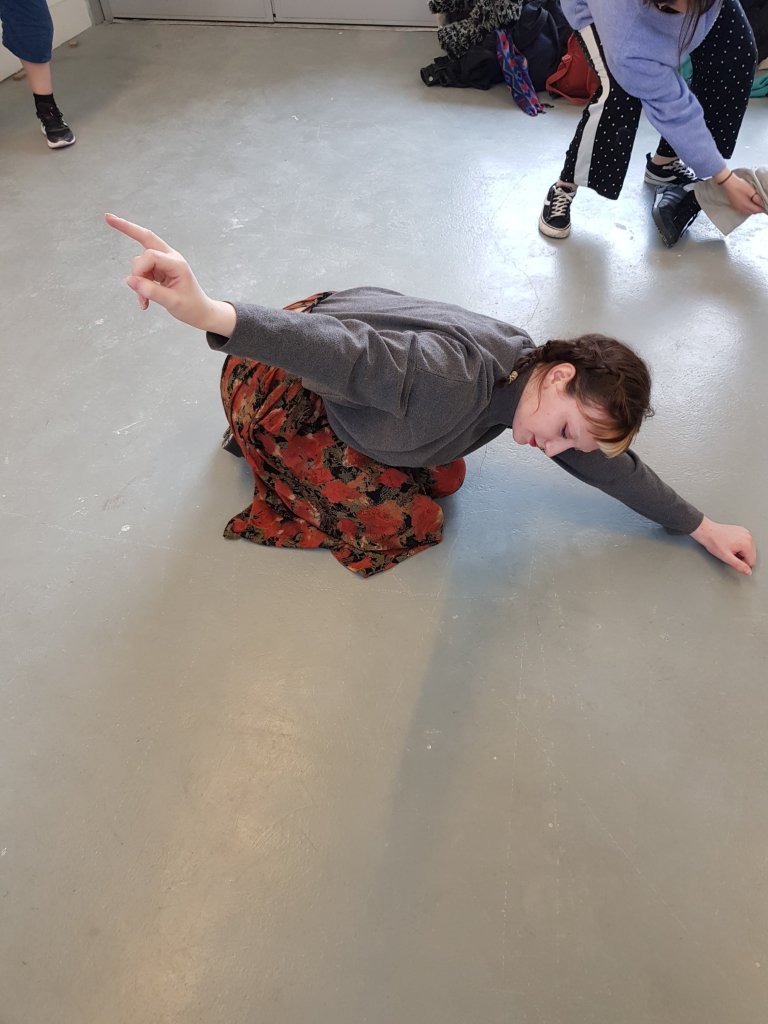
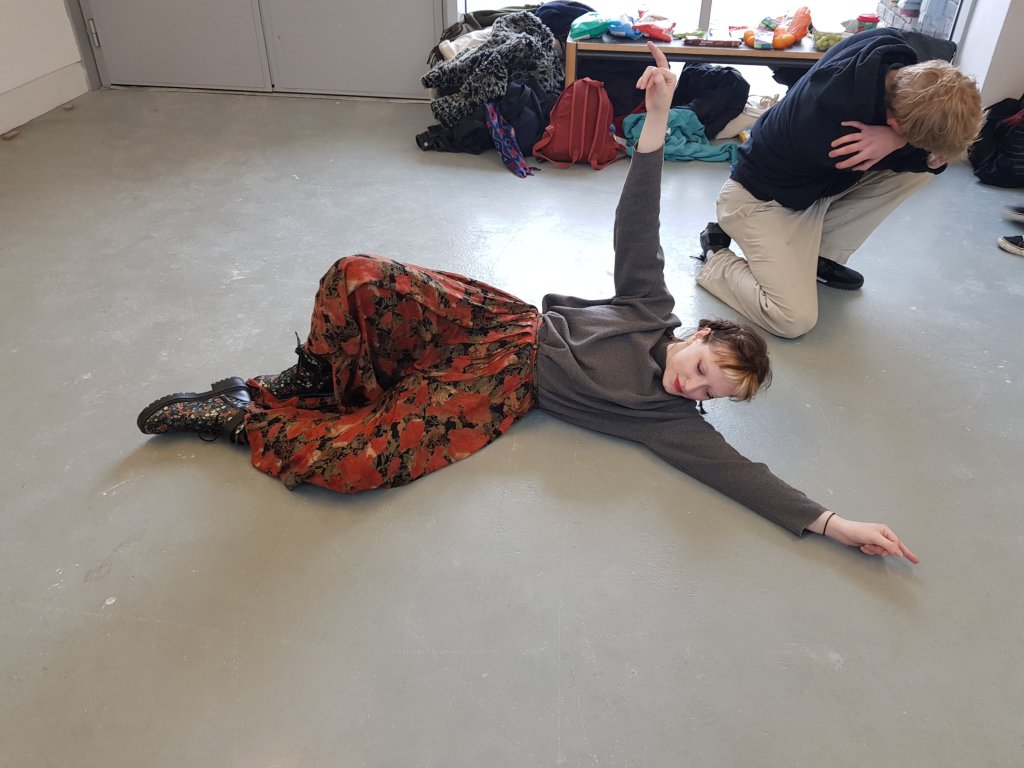
Body as Material workshop and performance/exhibition.

Our artist in residence Samantha Dick ran a 4 week performance art course,firstly introducing us to artists then giving us warm up excersises to do which included ‘body scanning’ (a meditive warm up excersise in order to help you relax and open up).’sculpting’ which was a fun warm up excercise where we were placed into partners and had to sculpt that persons body.Amongst other warm up activities

At one point we were told to write down something which is virtually impossible to do then to act this out in a flowing repetitive motion.I felt that this really helped when it came to performing later on.As it was a simple yet interesting technique to use.

We were then asked to bring in object that meant something to us or a piece of text and to take some words that we felt from these things then to perform a piece.I found this hard as I had had to go away to an appointment and wasn’t able to attend the workshop based around the object.I was told that my peformance had crossed the line of performance art into acting in the small performance that i had done and do think that i could of benifitted from the piece of the class that i had missed.

I still however managed to take the skills that i had learned and translate them into a small performance video which became part of my 3D work.

Tonight at our ‘body as material’ exhibition we curated our own work with the help of Samantha offering us guidance.

We initally experienced some technical difficulties with the hard drives and SD cards,some of which weren’t playing and one projector seemed to be projecting green.I drove back to the college with Samantha and another student so that we could get technical support from one of the college staff and drive her back to the college.Luckily we were able to replace the projector that was projecting green and the technical assistant was able to get the SD cards and hard drives to work.

https://drive.google.com/open?id=1J1eQoI2vHDb20ckWlKartu1HSrIyYgO3

https://drive.google.com/open?id=1Hu9hOLw901ap79nPenc63K2UaB35P3D9

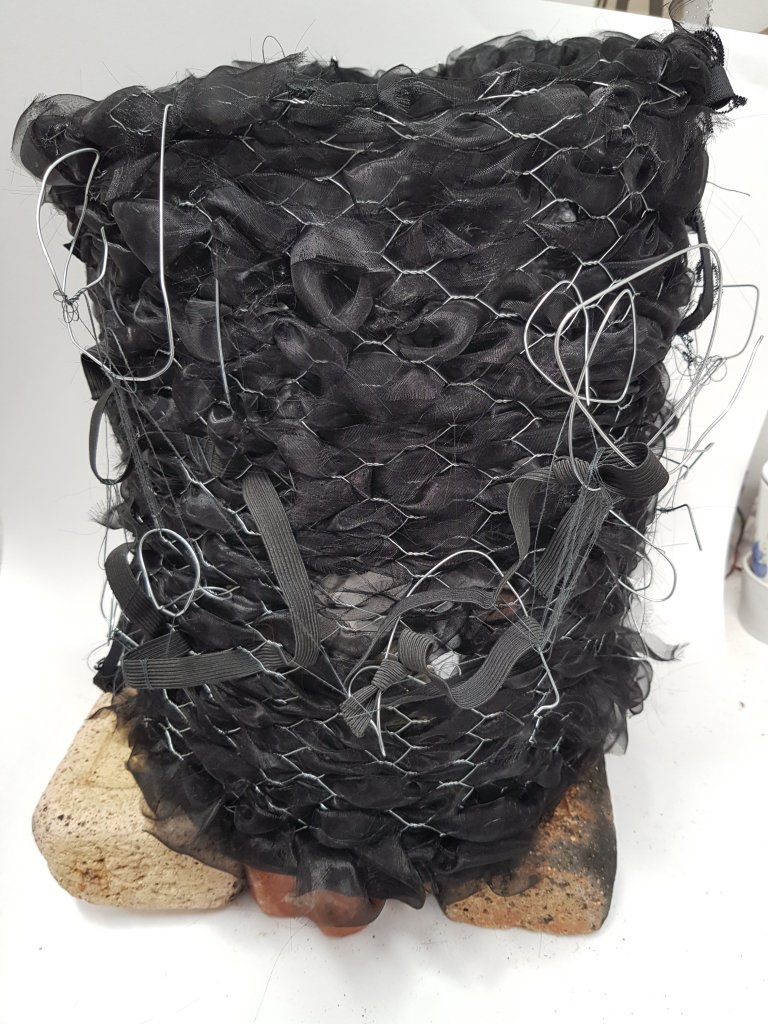
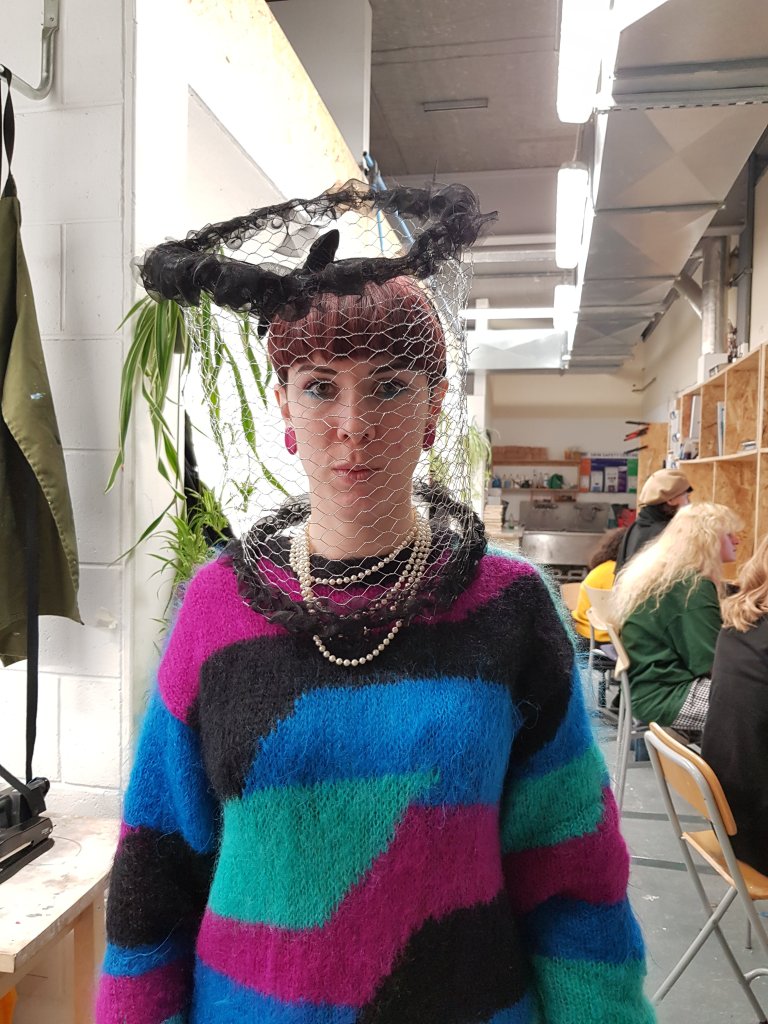
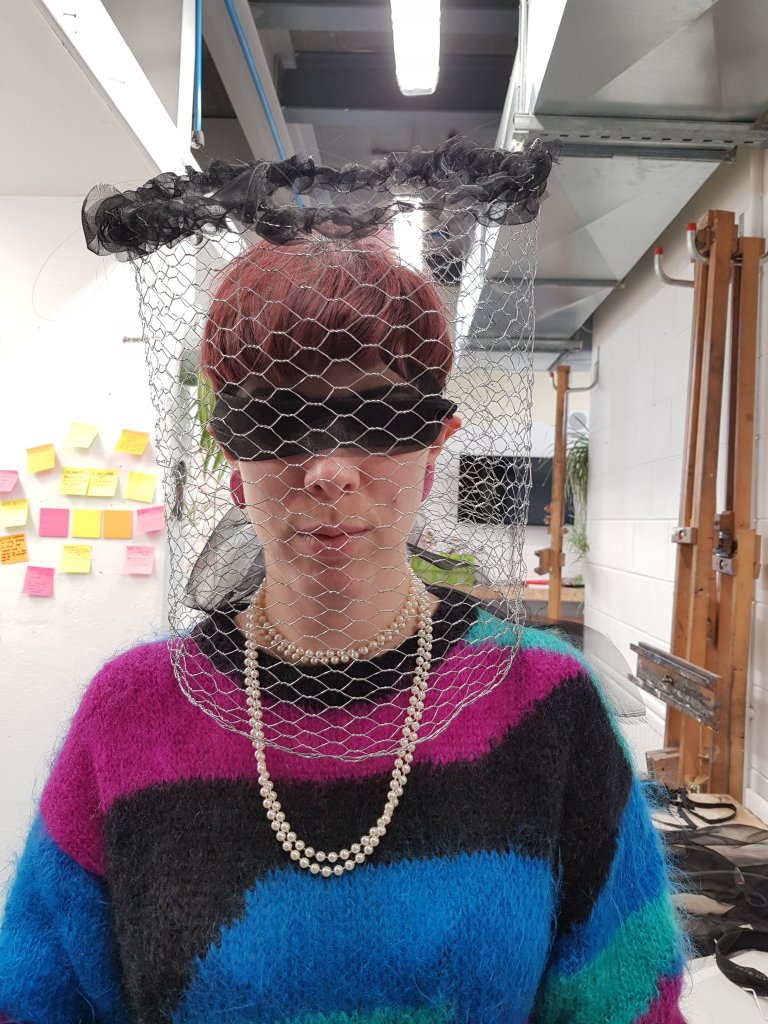
I also decided to debute my first performance along side this.My classmate was also performing at the same time so I found this comforting in a way all tho i was nervous.It seems since I have added the additional attachments to the headpiece that it had become dark and more claustrophobic.(I really should of tested this prior to the performance)Along with the added heat from the projectors I did feel quite faint but continued to perform anyway.I had considered a multitude of various ideas over the past few weeks so decided to blend a couple of them together and hope for the best.All in all I think it was a sucessful performance as I think it portrayed my ideas clearly to the room.And the feedback seemed positive.

https://drive.google.com/open?id=1J2asVIqblclWb9DZGOMGfTn6TYGsppPi

I think i would like to take performance art into my future work and use the skills I have learnt in the future.

Zoe Leonard (Artist Research)
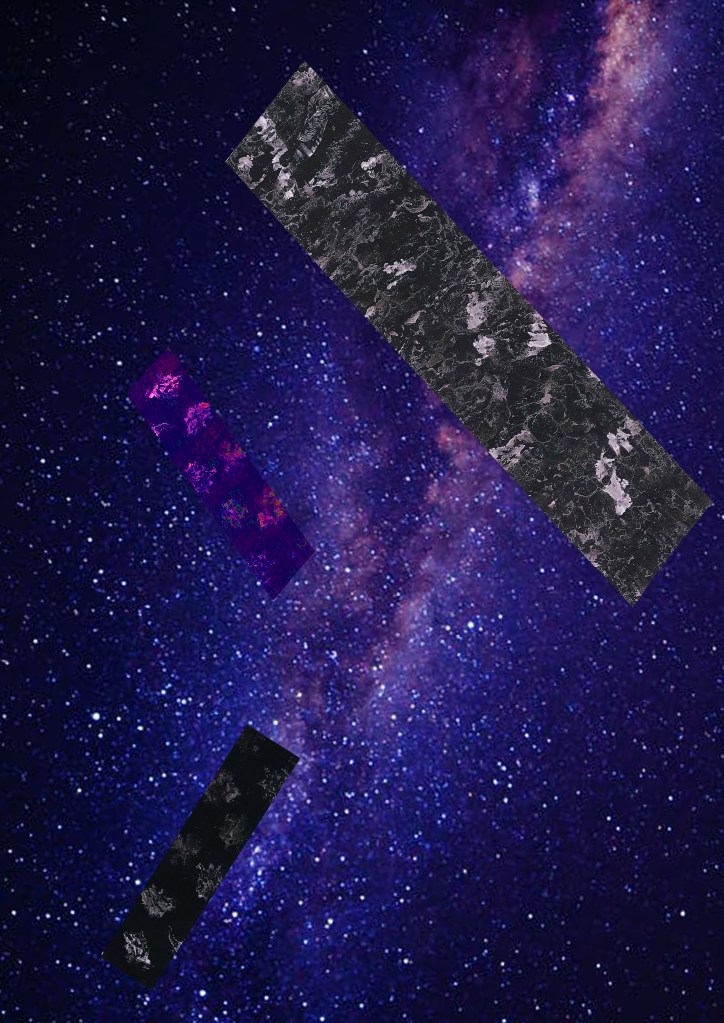
‘Strange fruit'(for David)

Born 1961 in Liberty New york.Age 16 she dropped out of school and started taking photographs.Living in New york provided the subject matter for many of her works (apartment buildings,store fronts,sidewalks,chain link fencing,graffiti ad boarded up windows.She works primarily with photography and sculpture. She has exhibited widely since the late 1980s and her work has been included in a number of seminal exhibitions including Documenta IX and Docunenta XII and the 1993, 1997 and 2014 Whitney biennials.

Alot of Leonard’s work reflects on the framing, classifying, and ordering of vision. She explained in a recent interview: “Rather than any one subject or genre (landscape, portrait, still life, etc), I was, and remain, interested in engaging a simultaneous questioning of both subject and vantage point, the relation between viewer and world.Basically, subjectivity and how it informs our experience of the world.”

Leonard was active in AIDS advocacy and queer politics in New York in the 1980s and 1990s. In 1992 she wrote “I want a president”, a poem inspired by Eileen Myles’s run for president.

‘a f a s i a’

In 1995 she staged an exhibition at her studio on the Lower East Side of Manhattan which featured the work Strange Fruit, an installation of various fruit skins (oranges, bananas, grapefruits, lemons) that Leonard saved and then sewed together by hand with wire and thread. Strange Fruit grew out of a deeply personal response to the losses of the AIDS epidemic and as a meditation on mourning, it became a seminal work of the 1990s. Strange Fruit was exhibited in 1998 at the Philadephia Museum of Art , where it currently resides

Louise Bourgeois (Artist Research)

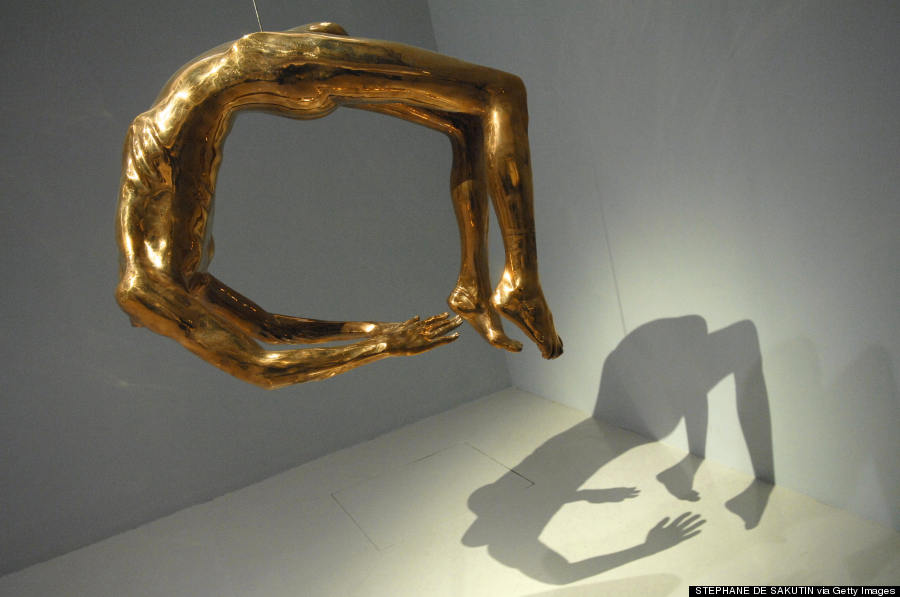
‘Maman’

Born 25 December 1911 – 31 May 2010) she was a French-American artist. Although she is best known for her large-scale sculpture and installation art, Bourgeois was also a well known painter and printmaker. She explored a variety of themes over the course of her long career including domesticity and the family, sexuality and the body, as well as death and the unconscious.These themes connect to events from her childhood which she considered to be a therapeutic process. Although Bourgeois exhibited with the Abstract Expressionists and her work has much in common with Surrealism and Feminist Art, she was not formally affiliated with a particular artistic movement.

She was the second child of three born to parents Joséphine Fauriaux and Louis Bourgeois. She had an older sister and a younger brother. Her parents owned a gallery that dealt primarily in antique tapestries.

Her mother died in 1932, while Bourgeois was studying mathematics. Her mother’s death inspired her to abandon mathematics and to begin studying art. She continued to study art by joining classes where translators were needed for English-speaking students, in which those translators were not charged tuition. In one such class Fernand Leger  saw her work and told her she was a sculptor, not a painter. Bourgeois took a job as a docent, leading tours at the Musee de Louvre.

Louise Bourgeois’s work is powered by confessions, self-portraits, memories, fantasies of a restless being who is seeking through her sculpture a peace and an order which were missing throughout her childhood

‘Echo IV’

Rebecca Horne (Artist Reserch)

Rebecca Horne

Rebecca Horne is a German visual artist (born 24th March 1944, Michelstadt, Hesse) (currently lives and works in Paris and Berlin)

Horne is from a generation of German artists who came to international prominence in the 1980’s. She practices Body art, performance art, installation art, sculpture and film. She also writes poetry which is influenced by her work. And sometimes creates work which is influenced by the poetry.

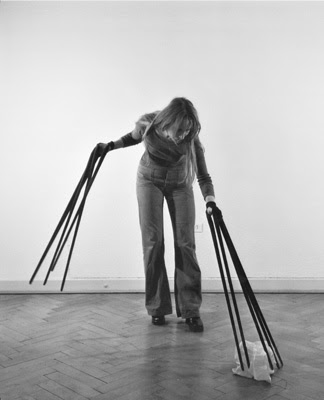
As well as this Horne creates bodily extensions or modifications. with padded body extensions and prosthetic bandages. In the late sixties she began creating performance art and continued to use bodily extensions

One of her well-known body modifications known as Einhorn (unicorn) the theme for this being the person’s contact between themselves and his/her environment.

Horne spent most of her late childhood in boarding schools and at nineteen rebelled against her parents’ plan of studying economics and decided to instead study art. In 1963 she attended the Hochschule fur bildende Kunste Hamburg (Hamburg Academy of Fine Arts). A year later she had to pull out of art school due to working with glass fibre without a mask. She contracted lung poisoning and remained for a year in a sanatorium after her parents had died also.

This experience gave her a heightened sensory awareness which was projected into her early performances such as ‘Due to her illness having such a hold over her she could only work with softer materials such as coloured pencils which are still her favourite drawing tool.

As she slowly broke out of her isolation she started to create sculpture and strange extensions with balsa wood and cloth whilst lying in in bed. Her goal being to rid herself of her loneliness by communicating through bodily forms.

Many of her works explain the double meaning in the idea of lenses One would think that a large tinted lens exists for protection and cover, but it also has the effect of drawing attention to the person or figure behind it. The paradox of looking out and looking back is explored in her installation piece for Taipei 101, Dialogue between Yin and Yang (2002). The work sets up interactions between viewers, environment and sculpture as it uses binoculars and mirrors to suggest the passive and active energies.

Image result for rebecca horn Einhorn
‘Finger Gloves’ 1972
Image result for rebecca horn Einhorn
‘Pencil Mask’ 1944
Related image
‘Body extension’

3D Practice/Development.

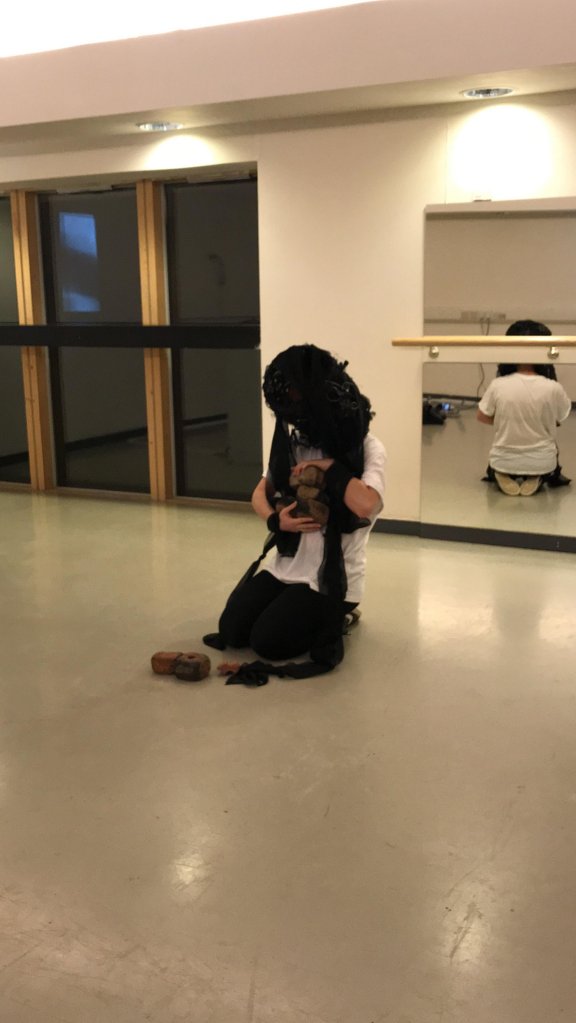
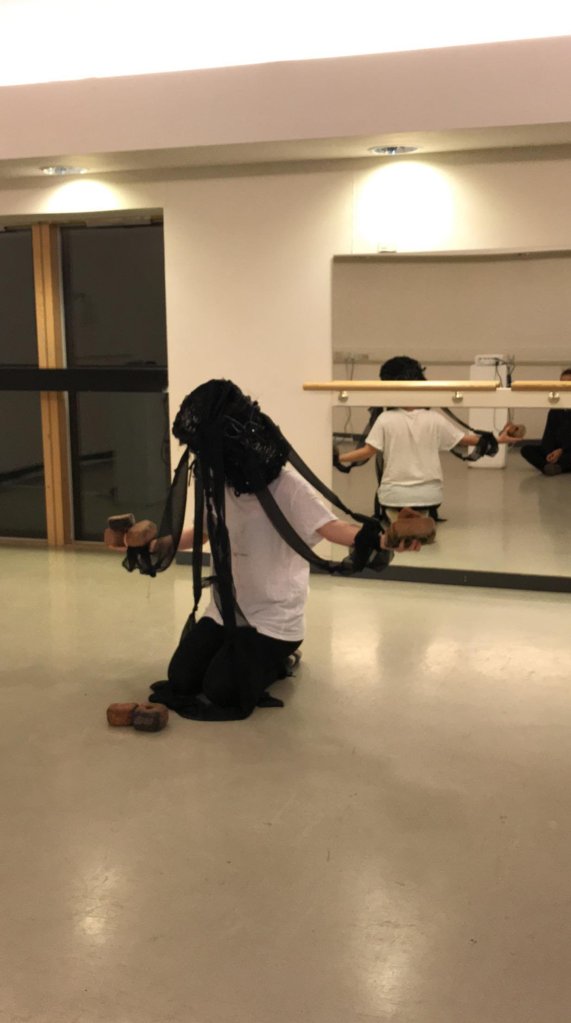
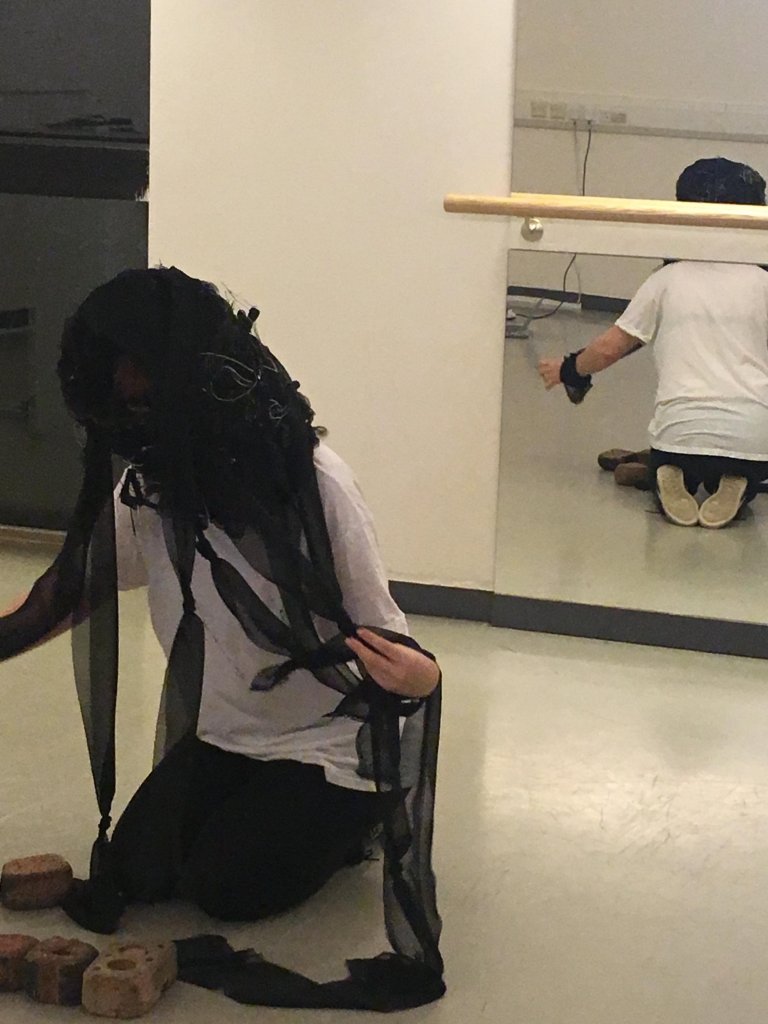
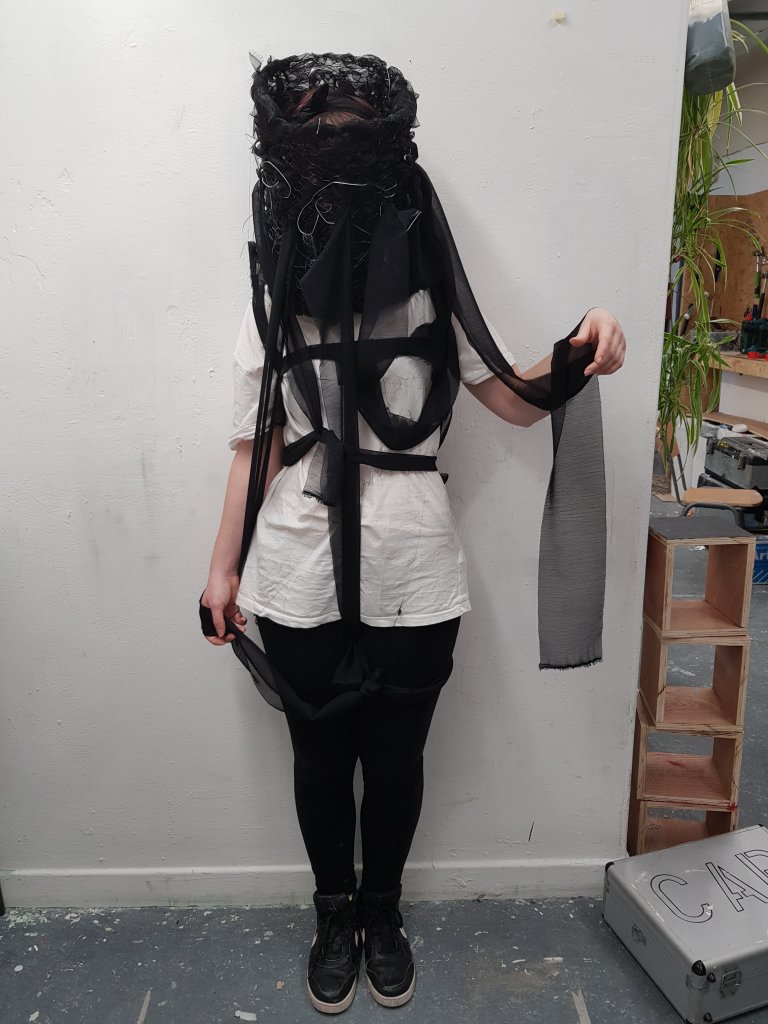
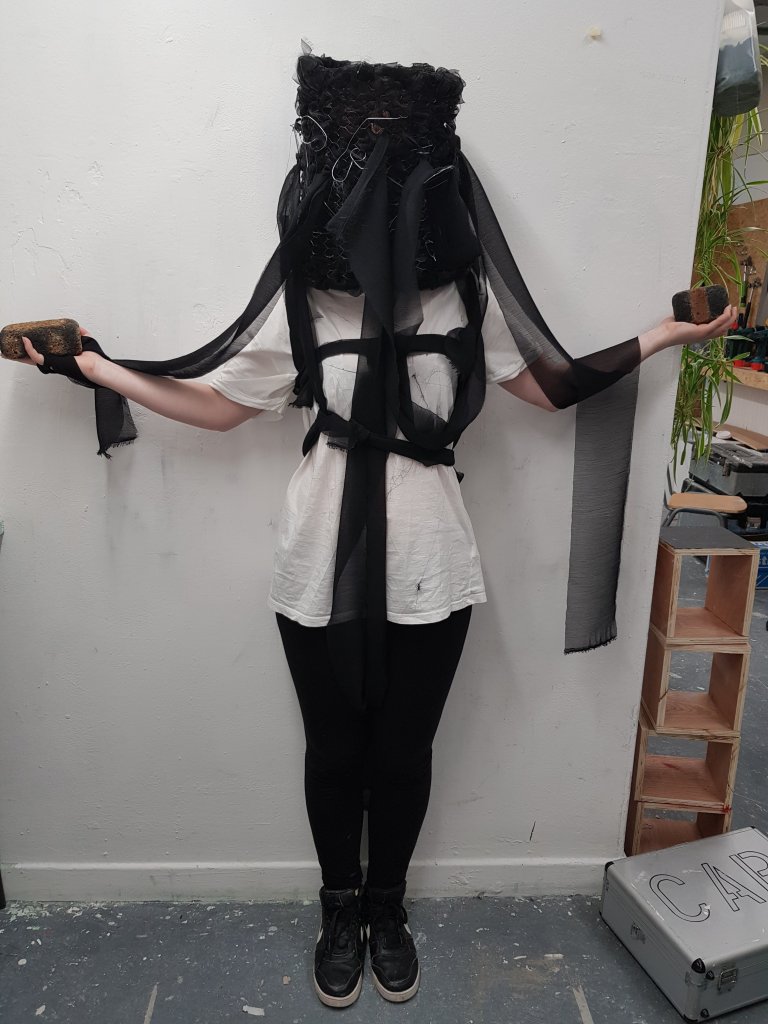
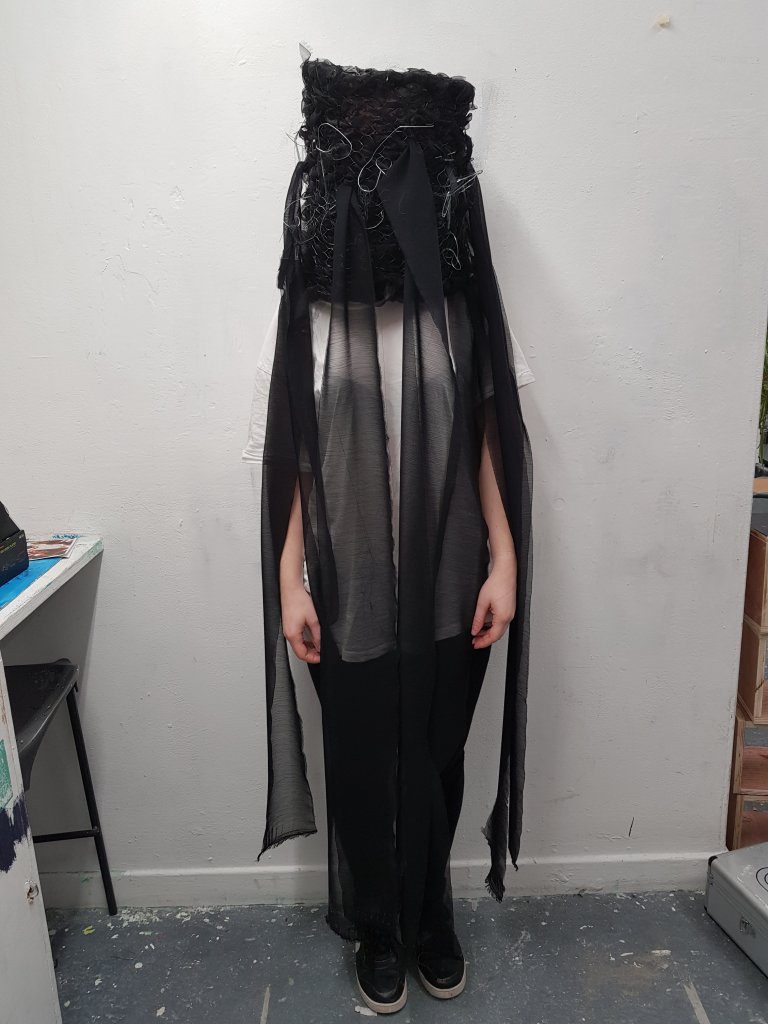
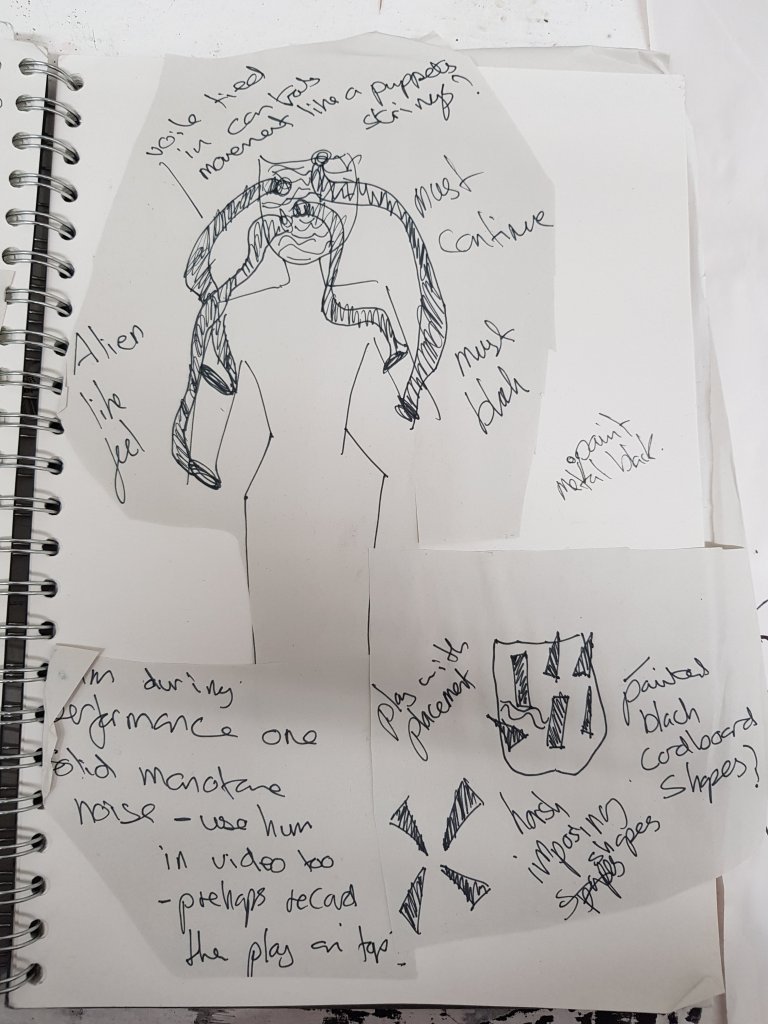
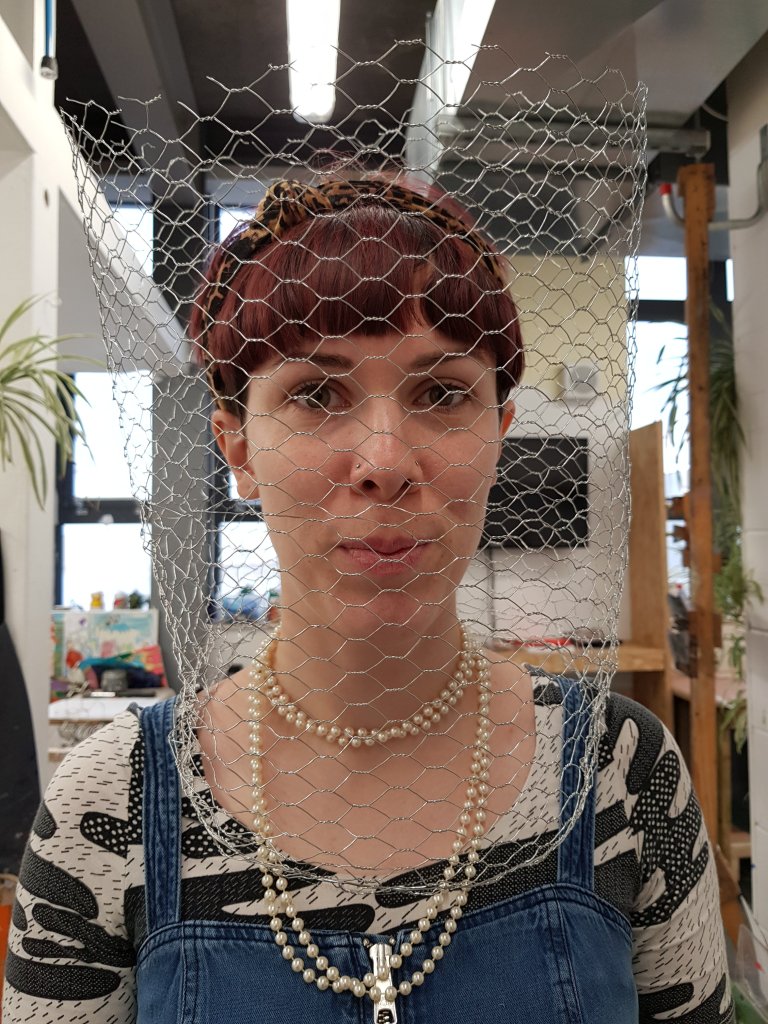
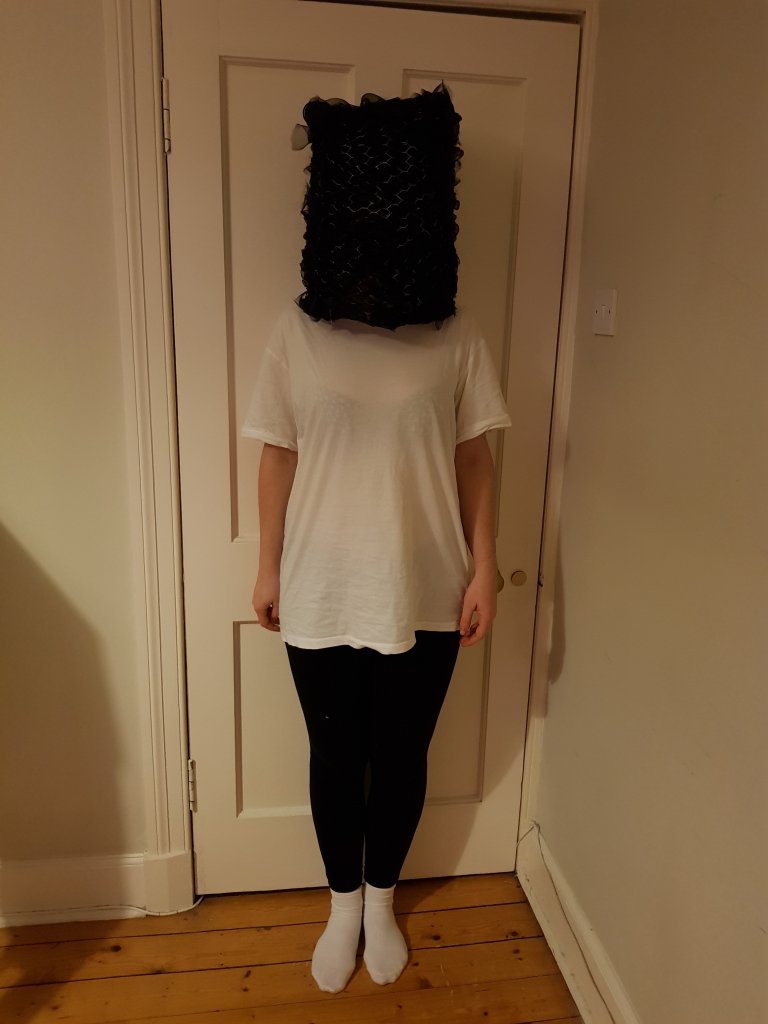
As my ideas have started to progress more I have started to think about different ways I could show how PTSD controls the body in a visual format.I asked a peer to tie voile which I had attached to the headpiece around my body.Looking at the photographic documentation I feel that it looks too sexualised especially where it is tied around the breasts.I feel that it should of just been tied on my arms and legs.Being the model myself it was hard to have the perspective not being able to see it from an outsiders point of view and only being able to give directions.

https://drive.google.com/open?id=1DpvIL1Wsiwv3WiJRG-N7dkKfugnDVb9u

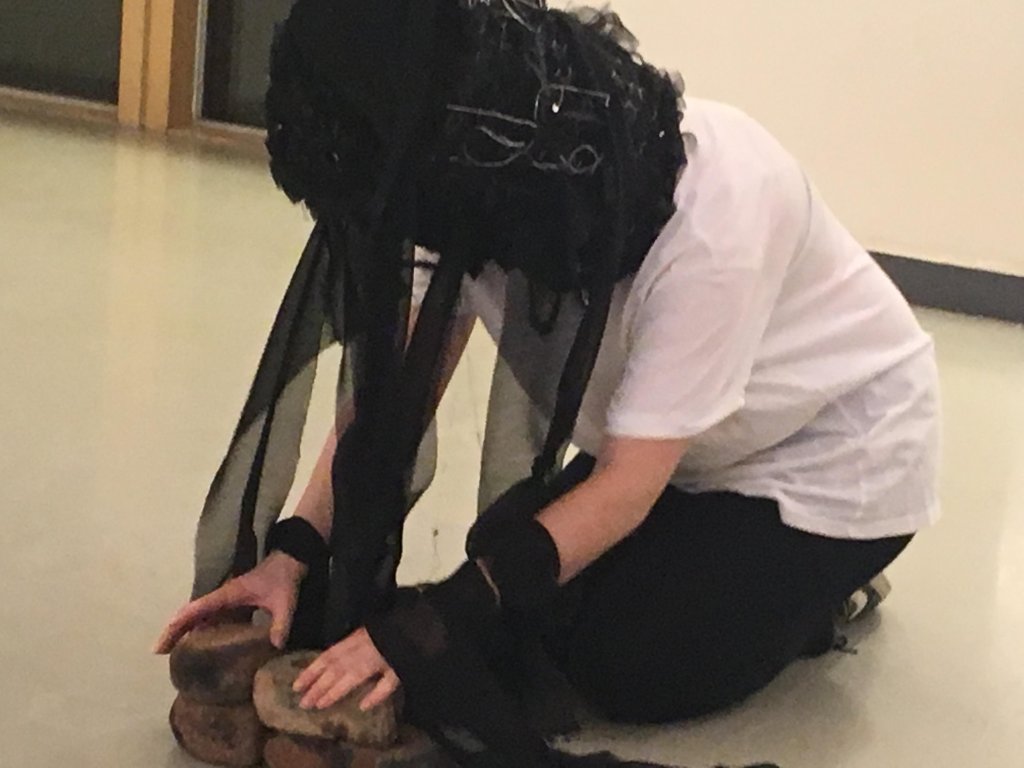
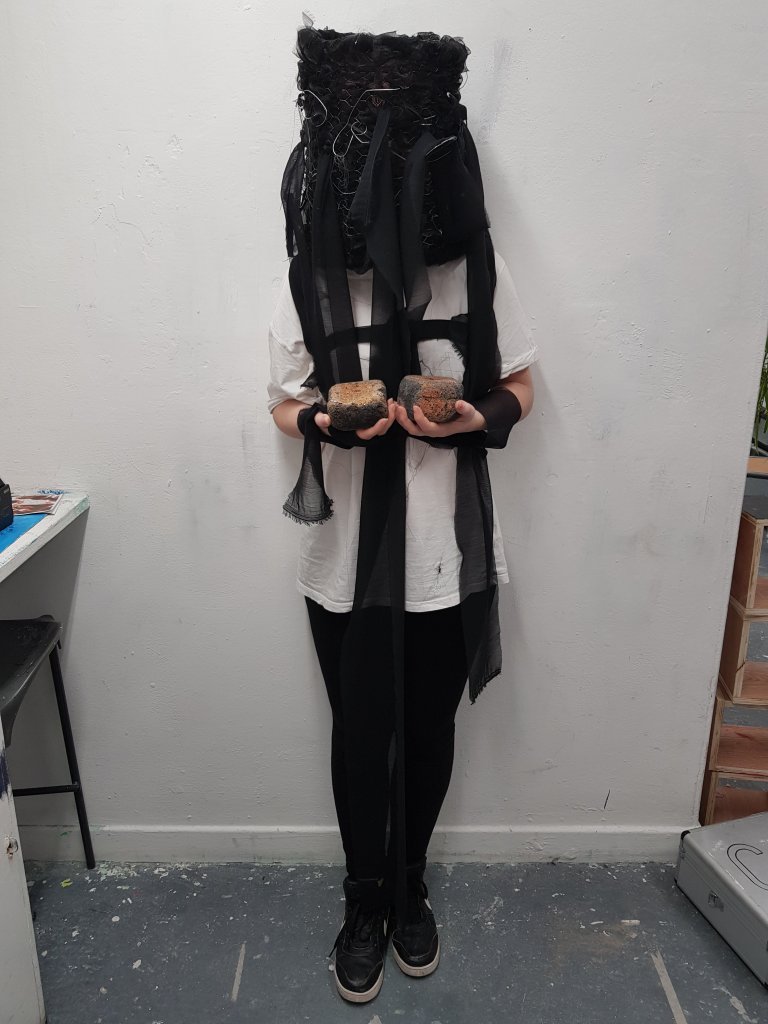
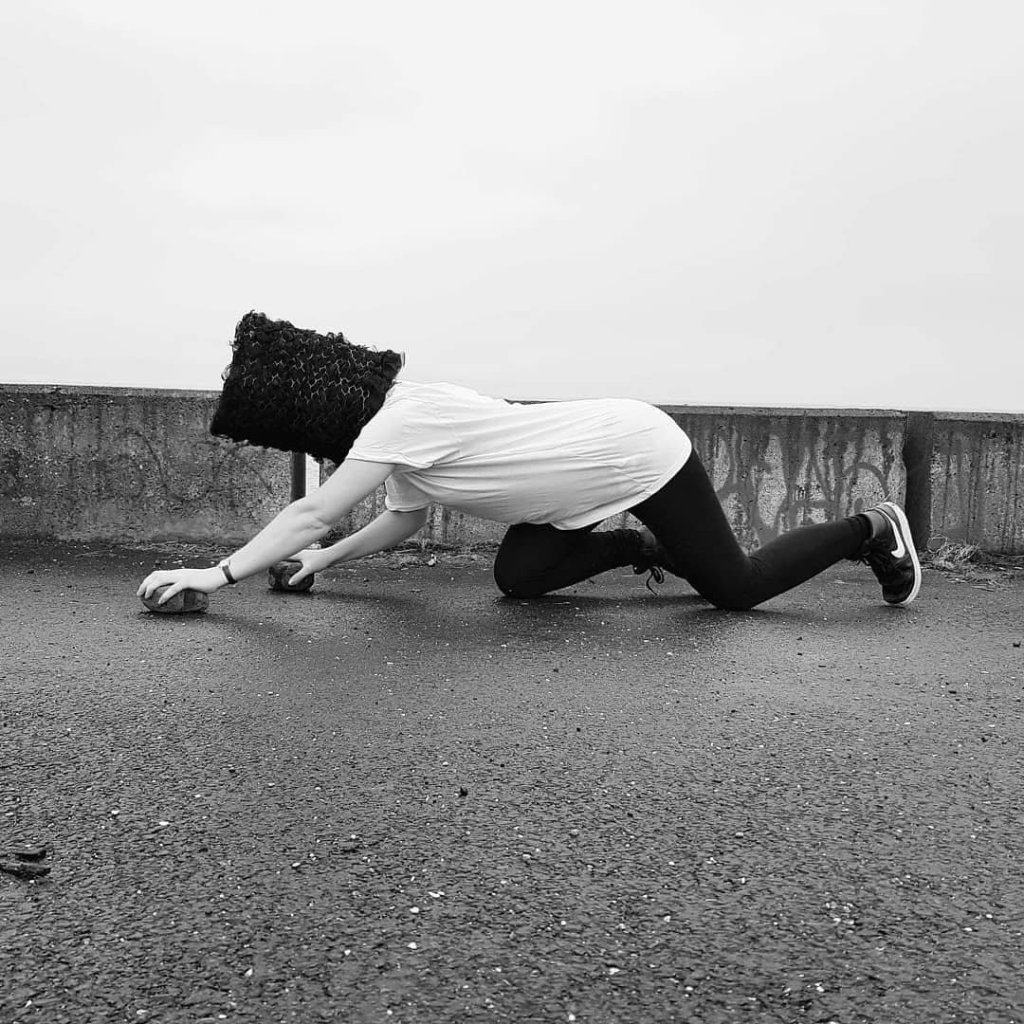
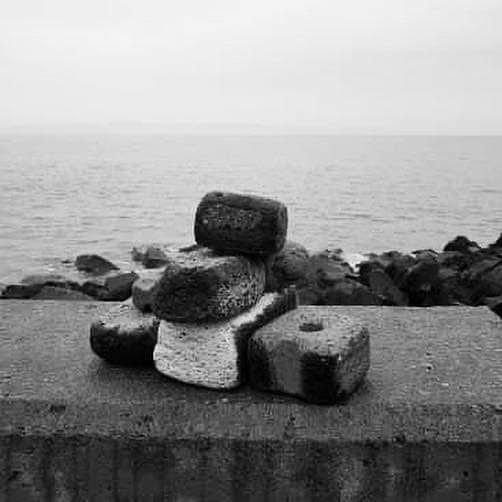
I started to play about with the movement of bricks with the weight of the bricks within my hands in these shots which I feel worked sucessfully in portraying my message of the heavy weight that PTSD bares especially when avoidance comes into play.

I decided to create some video’s showing the bricks appearing one by one weighing down that person physically and mentally.

https://drive.google.com/open?id=1DubF1LyT6B5V1fhgGUMJrD1PXoawUUMg

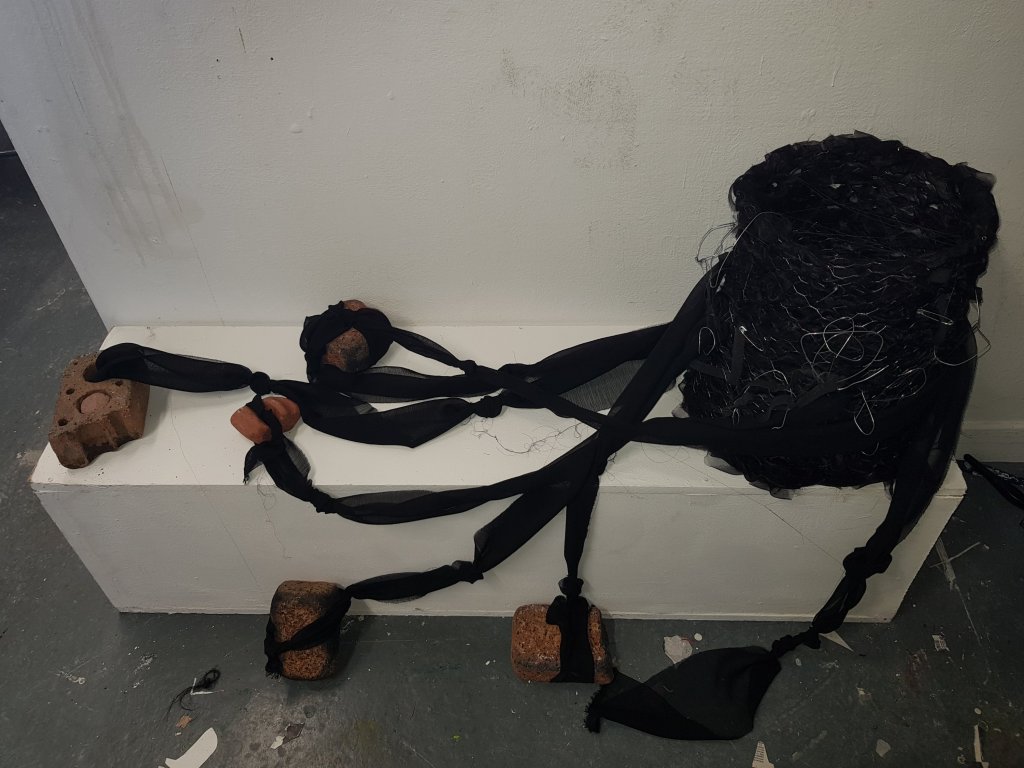
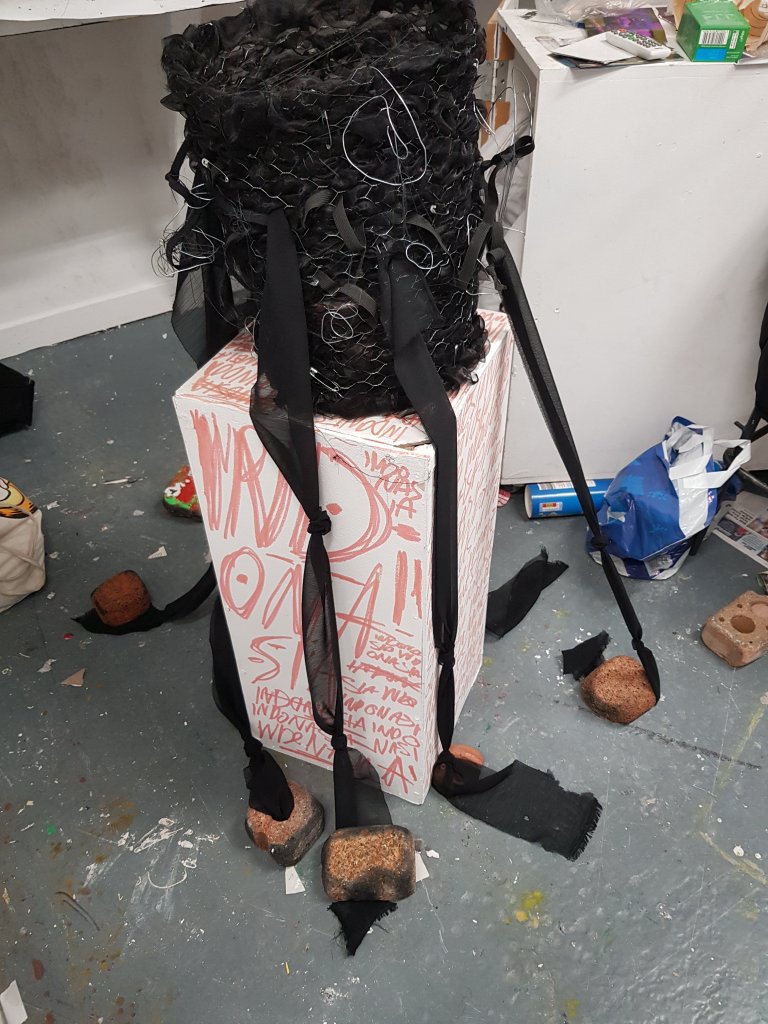
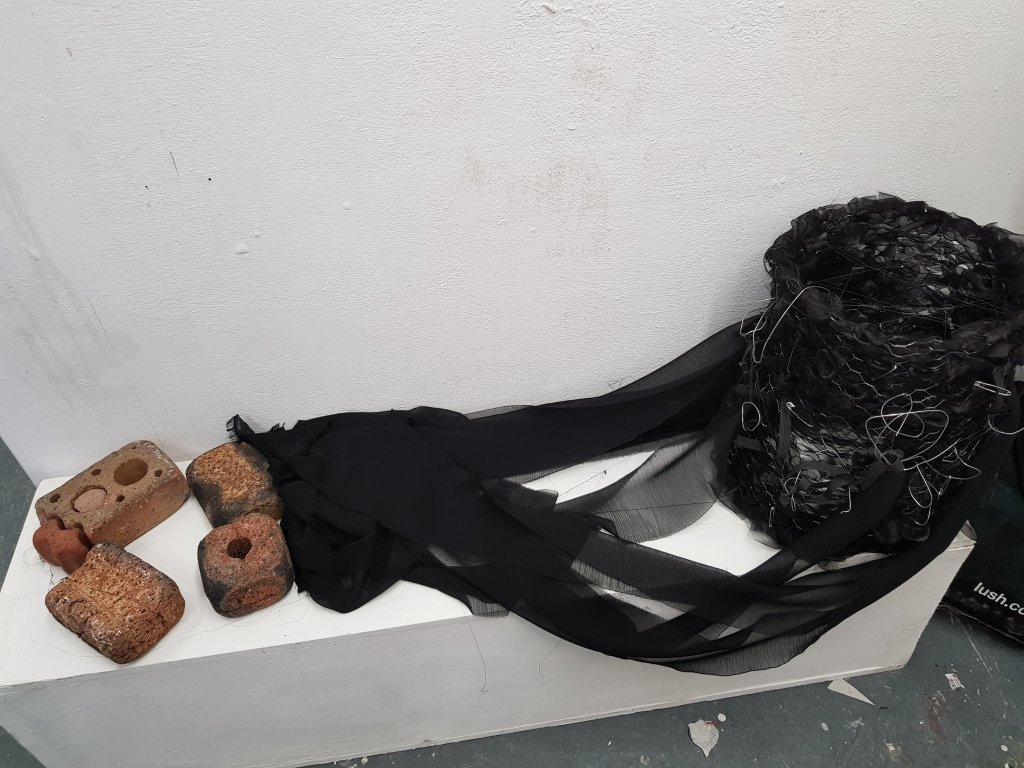
I then decided to look at different ways the headpiece could be displayed as a sculpture and coincide with the video’s made which would project in the background.

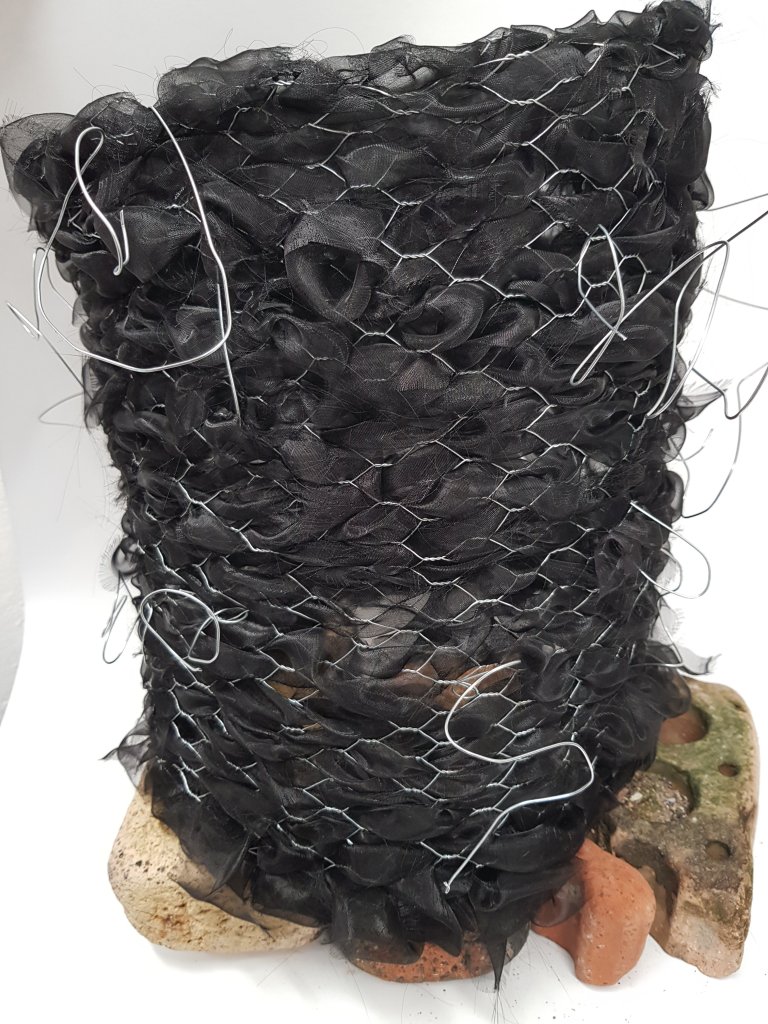
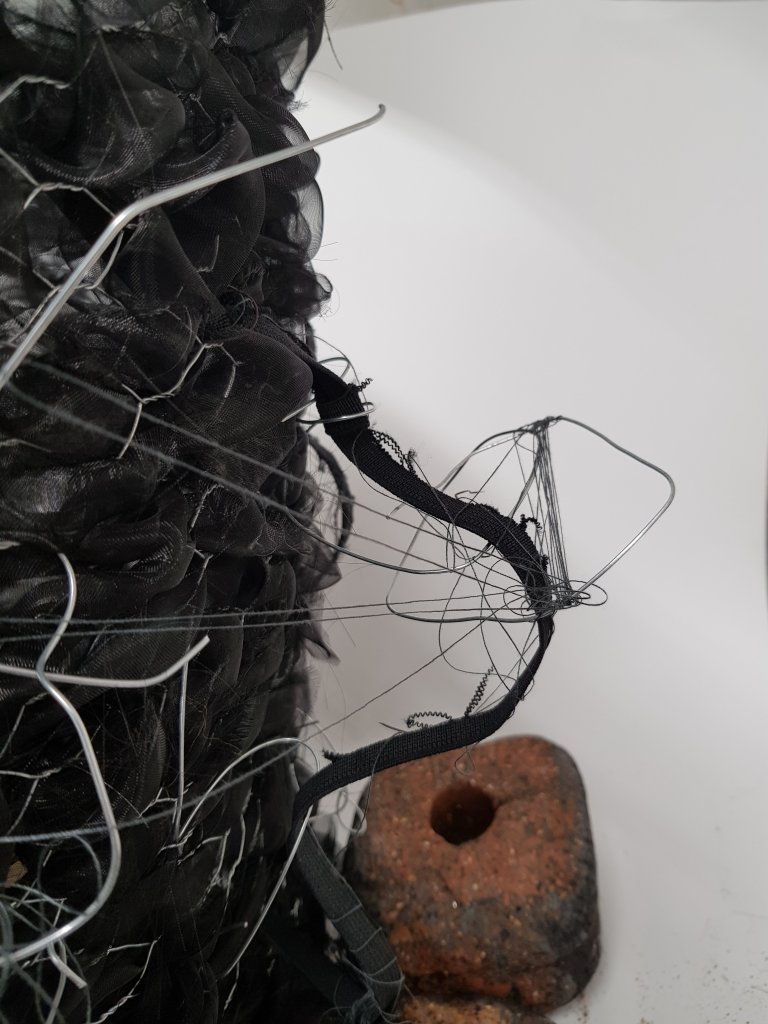
I decided to choose the first option as I felt that it visually worked the best and turned the headpiece almost into some kind of creature within itself greedy to hold onto the bricks.

3D Practice/Group Crit.

During my group crit it was observed by the tutor and fellow peers that i had some strong ideas,I had mentioned prehaps making some cylinder resin casts and was told that maybe I should just continue to focus on how my film will be viewed and how my sculpture will take part in this.Will the film be projected onto it?Above it?And to prehaps trial using the televisions too.

I decided to try and project onto the head piece itself but the lens was too big.I tried moving the projector as far away as possible from it and scaling the size using the lens (as advised by the technician but still no luck.I liked the look of how the film projected so decided i wanted to keep it that way and display the headpiece somehow with the bricks under/around/infront of it.I have done some experimentation with how to display this but need to experiment further.

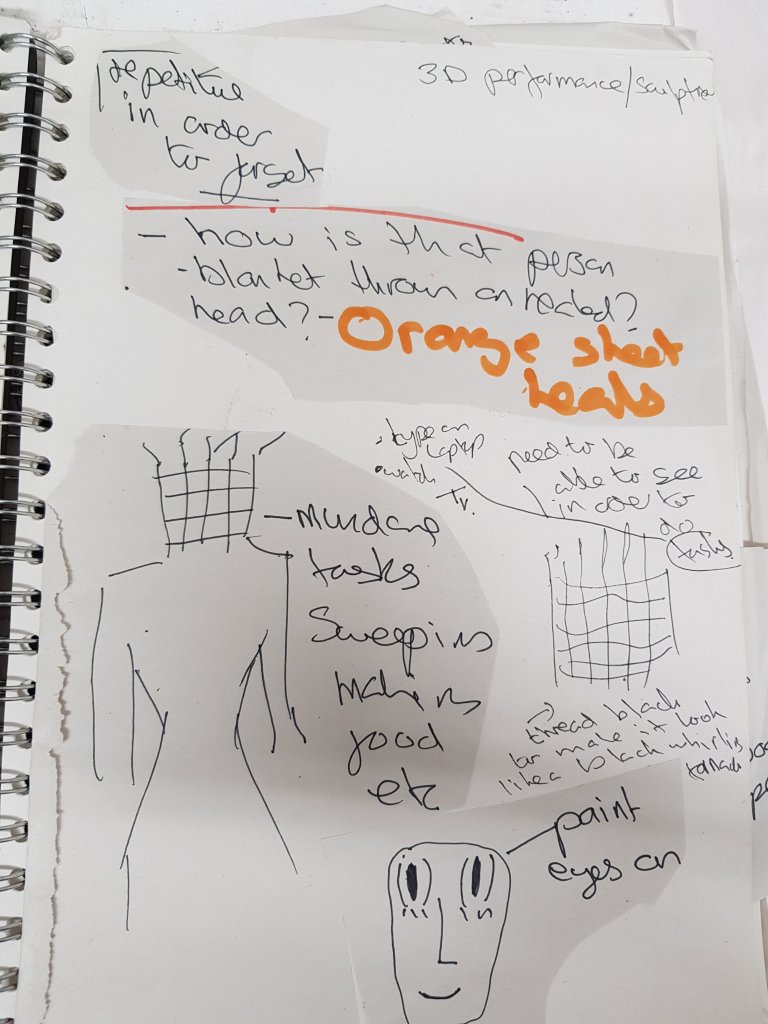
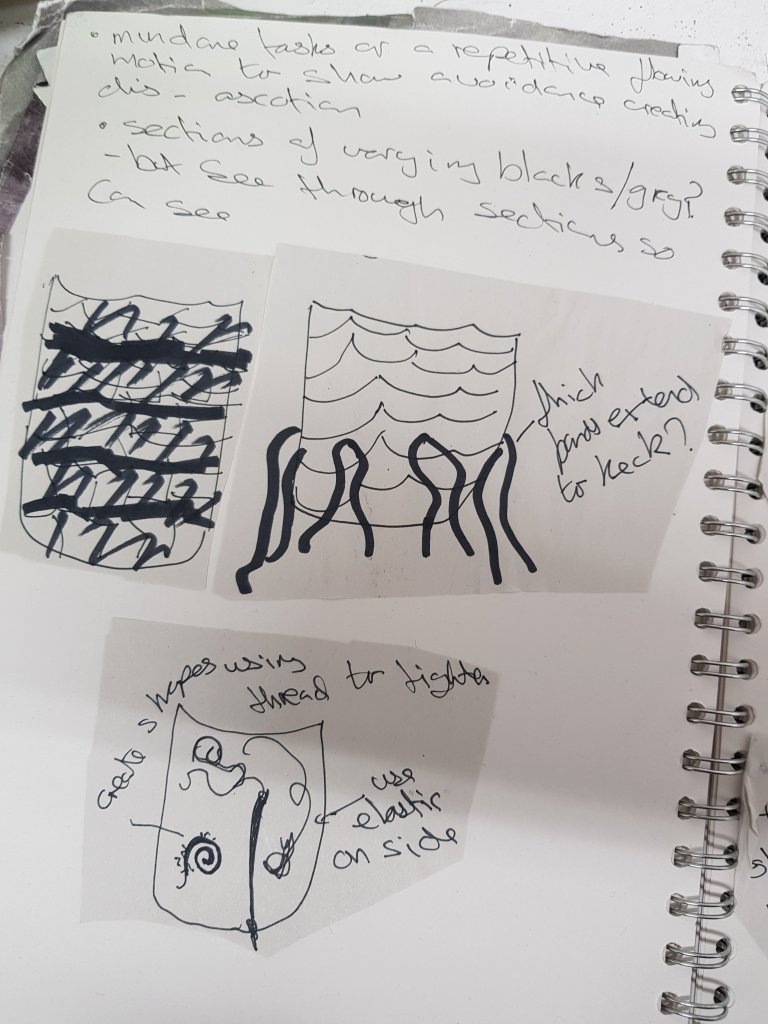
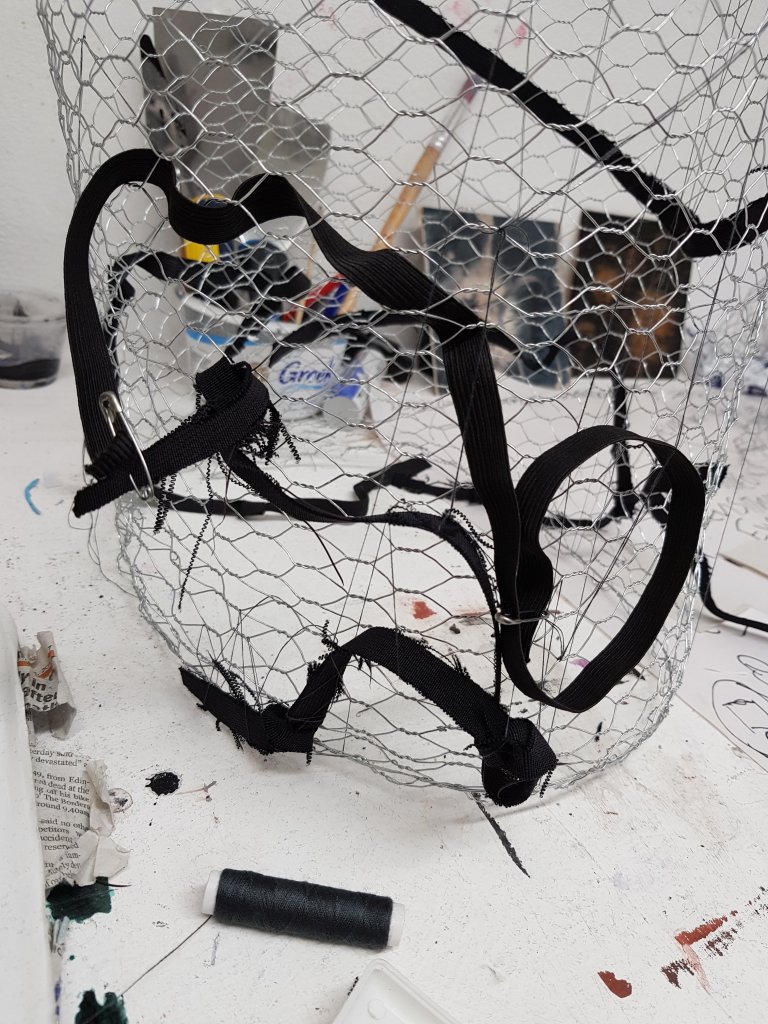
I was also asked if I would be adding more to the headpiece so I said yes,as I plan to add safety pins,wire,black elastic and thread and prehaps attach some voile from the head to the arms to show how the brain controls the bodies actions during PTSD.

https://drive.google.com/open?id=1CuFsv_N5F-AKljr3ciFl4w40YfGxqqrb

Projection projected onto studio wall.Black and white is really effective against the white background.

3D practice

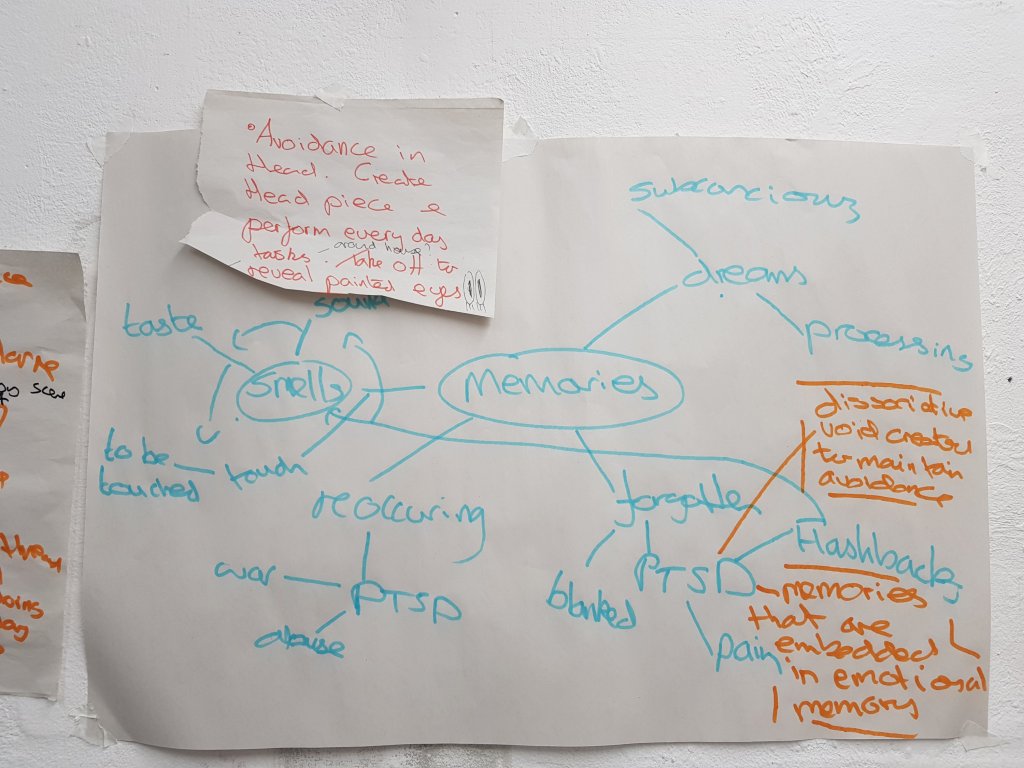
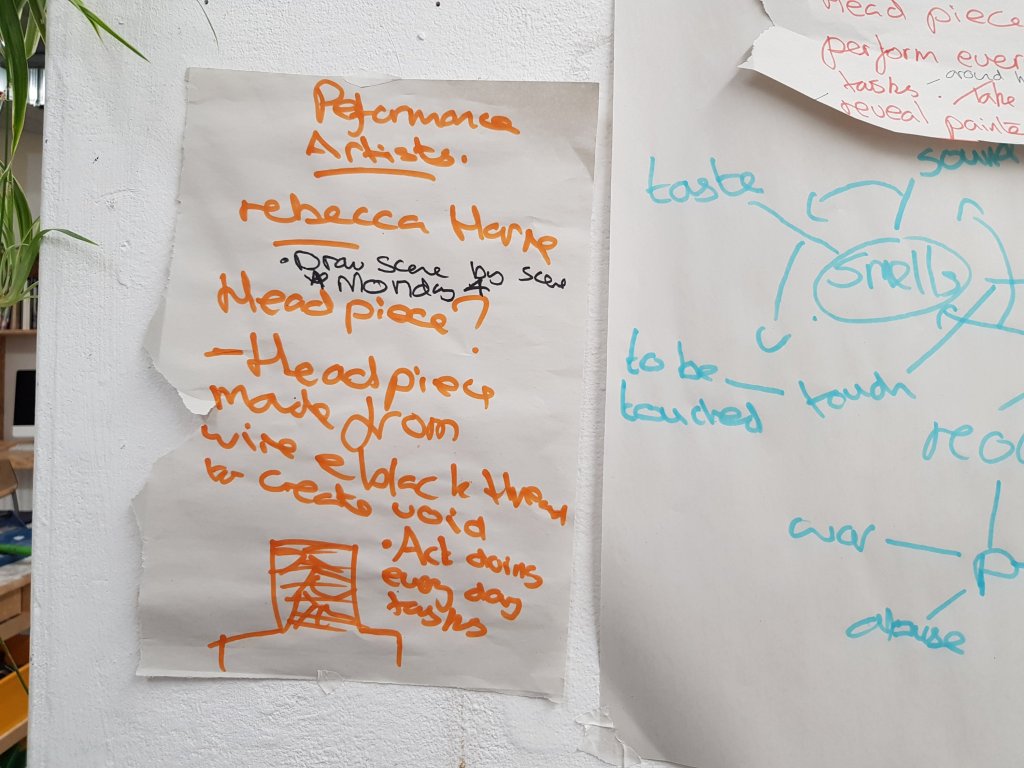
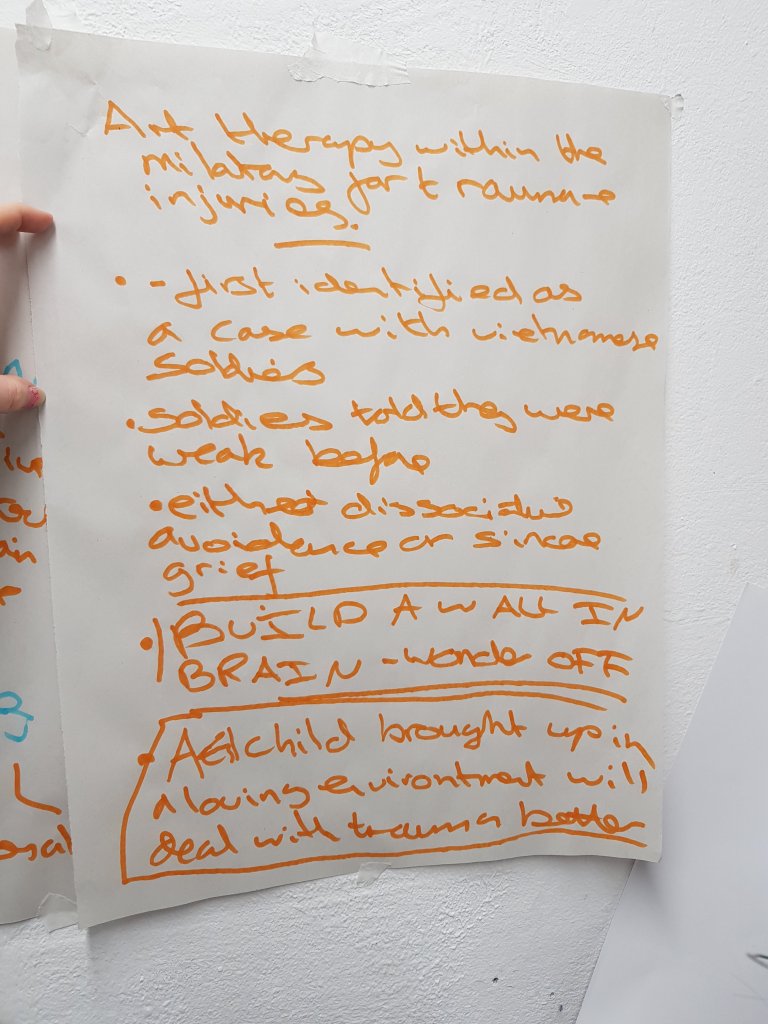
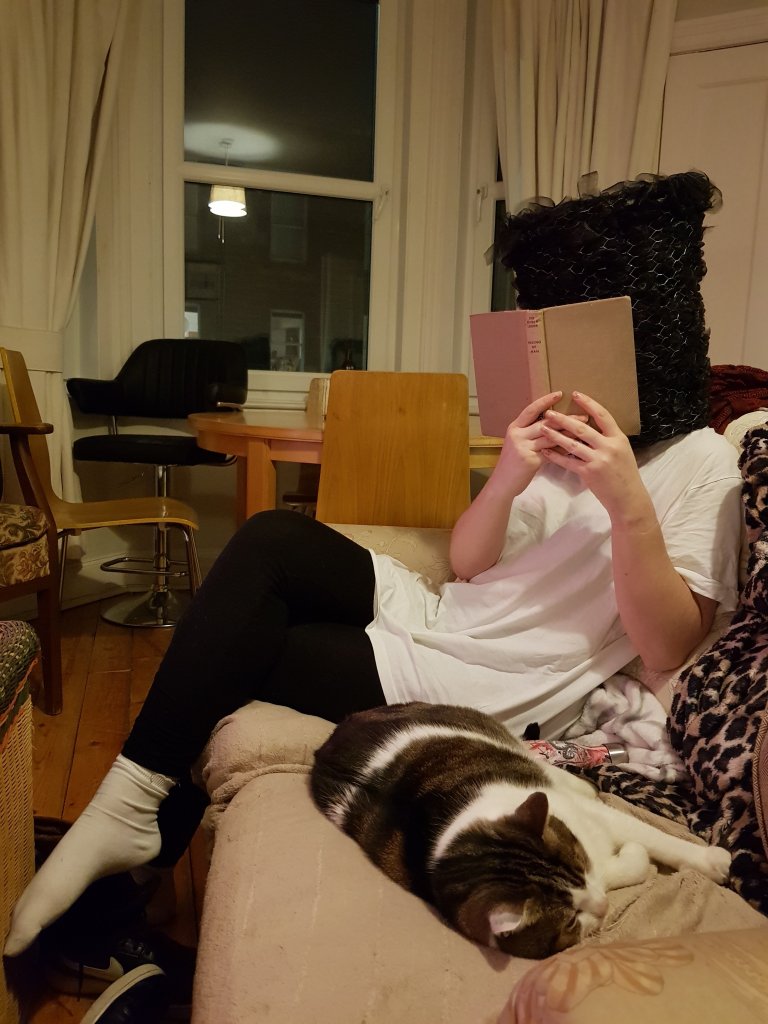
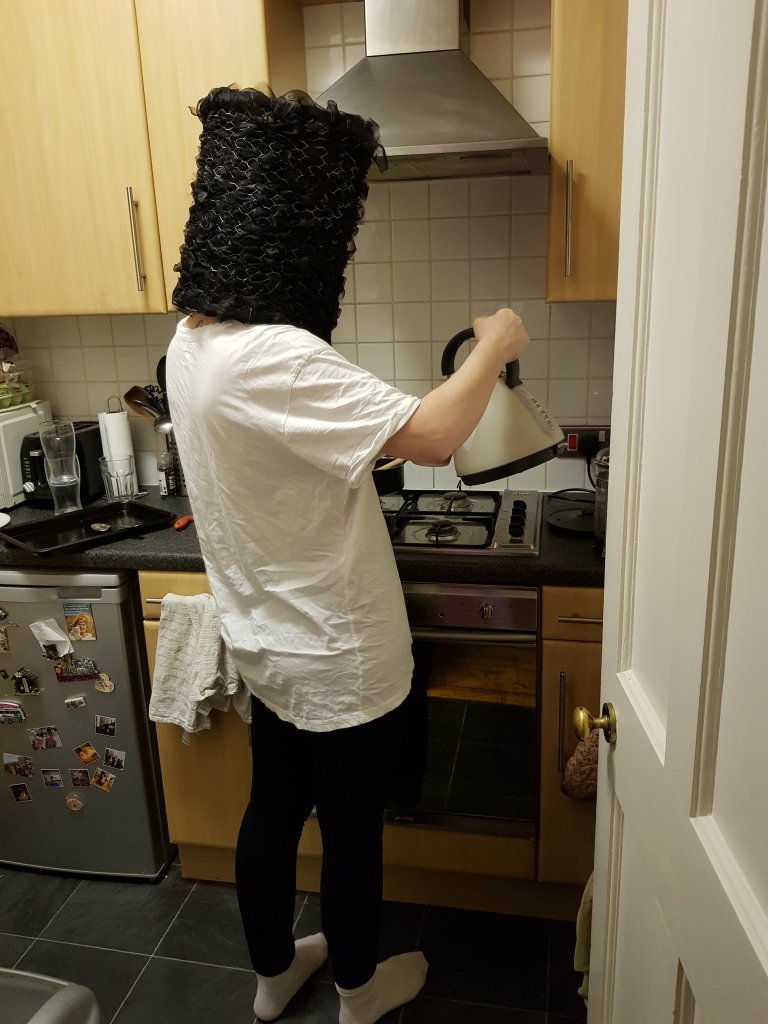
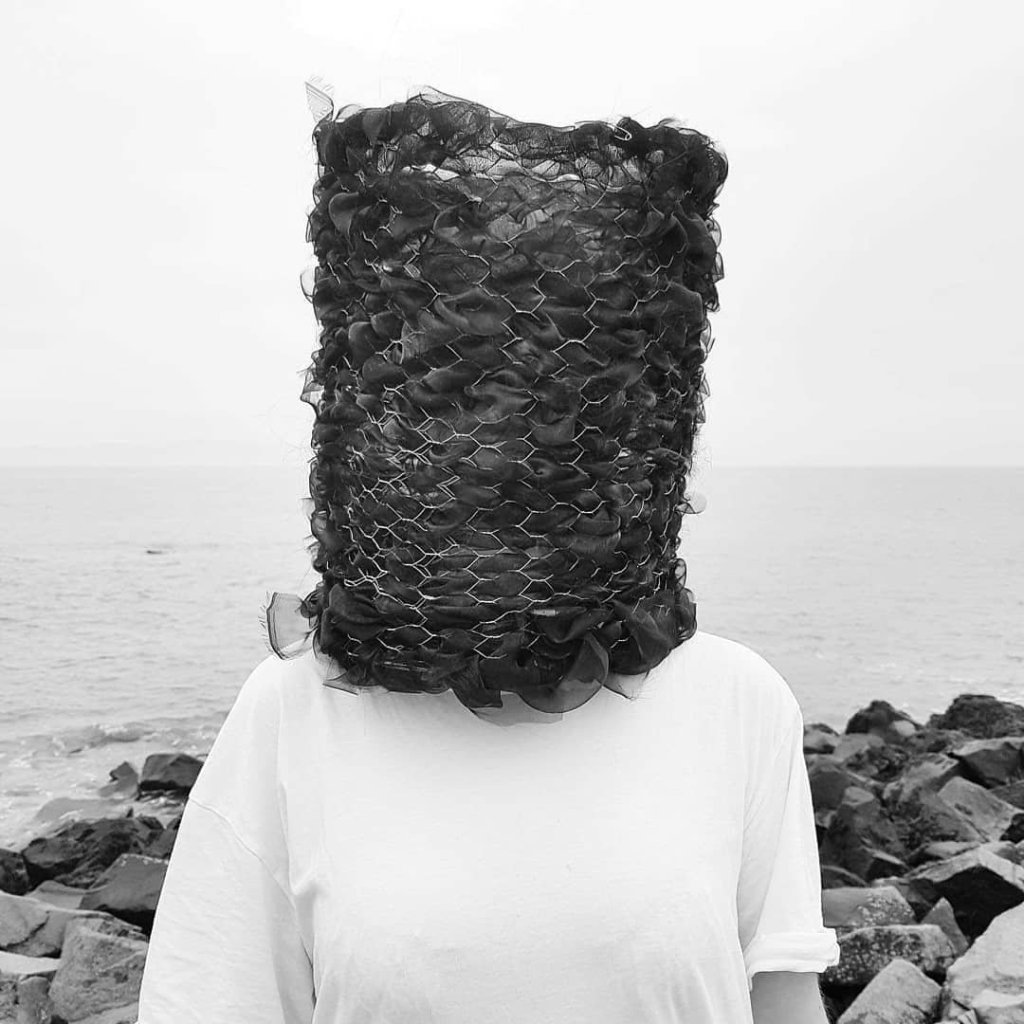
Through mindmapping I decided to focus on PTSD and the void that is created in that person’s head by disassociation with the event itself and in turn that person usually attempts to busy themselves in order to distract from the events that happened.I wanted to created a physical form that was representative of the void in that persons head.I also wanted to look at the physical presence of weight and relate it to the weighing pressure of traumatic events that weigh down that persons mind.

I felt inspired by looking at Rebbecca Hornes body modificationa such as Einhorn (unicorn)

I also felt that ‘the void’ tied in well with my last project.I enjoyed this theme and wish to continue it into this one I also decided to use bricks and bring the use of not only the sound but the physical presence back in aswell

Mona Hatoum’s piece ‘performance still’ 1985. I found myself quite interested in the thought of using the body to drag/push something.And using items of meaning to do so.

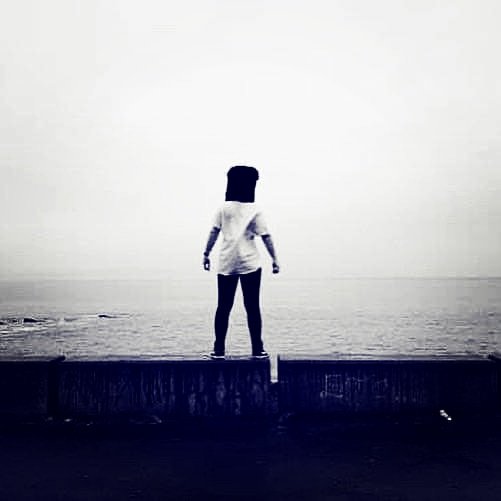
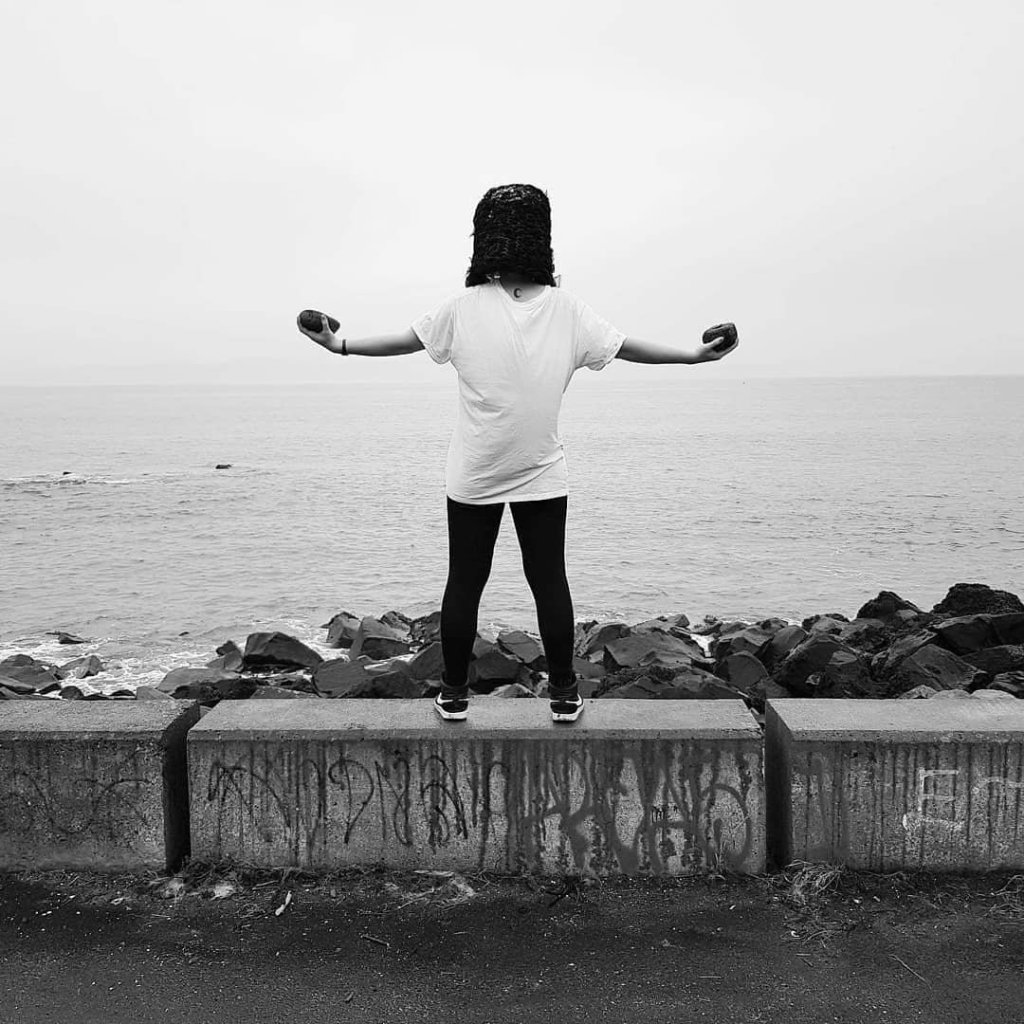
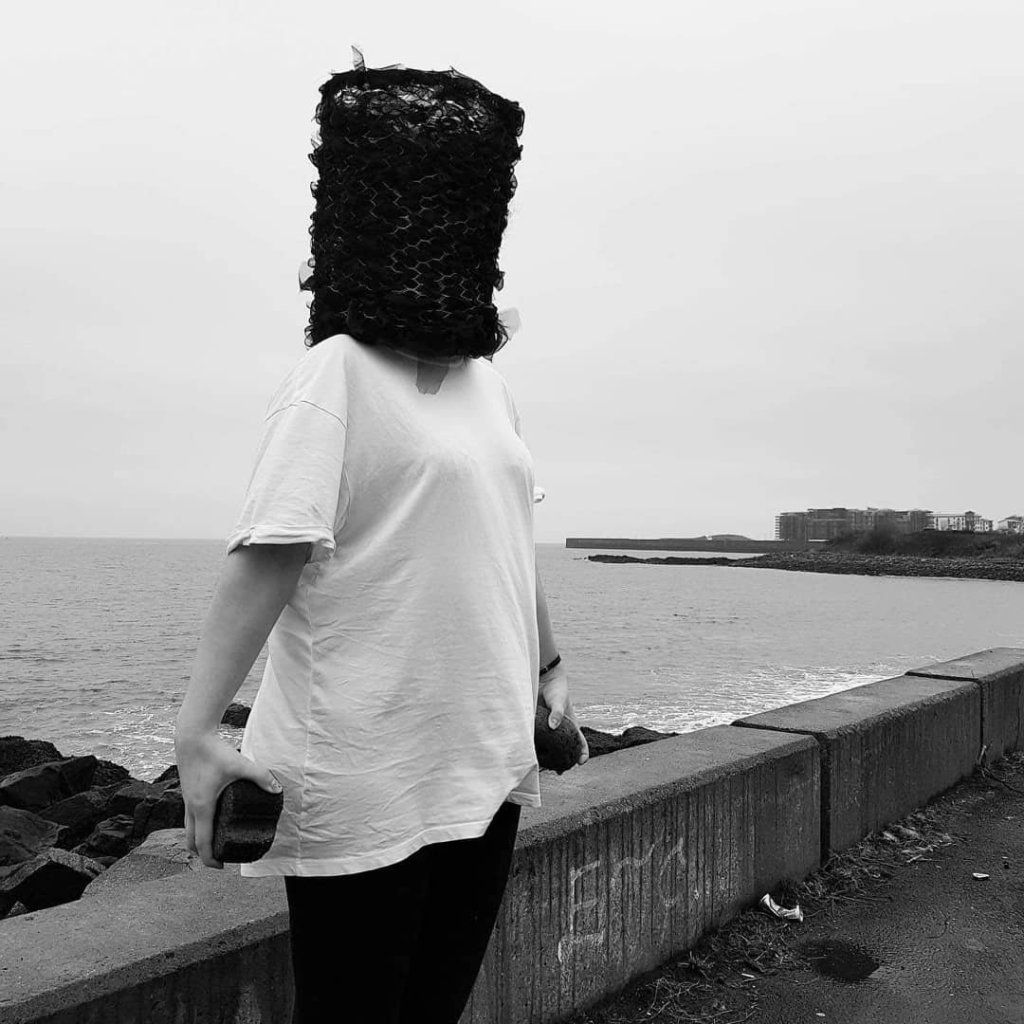
Iwanted to experiment with some performance art pieces down by the sea which is connected with being spiritually healing.I wanted it to symbolize there being healing availible out there but due to the block the void causes ultimately avoidance is put in place weighing that person down.I decided to use black and white to create more of a serious atmoshpere.I specifically choose a day where it was misty and rainy/windy to create and atmosphere aswell.The wind also created interesting shapes on the t-shirt which resembles waves. (This can be seen more clearly in the video below)In some of the face on standing shots it is also hard to tell whether the body is facing forwards or backwards giving an alien like feel and connecting with the alienation that person may feel.

https://drive.google.com/open?id=1BtKmxlOantsJh5k5um-prmR8inBMscBs

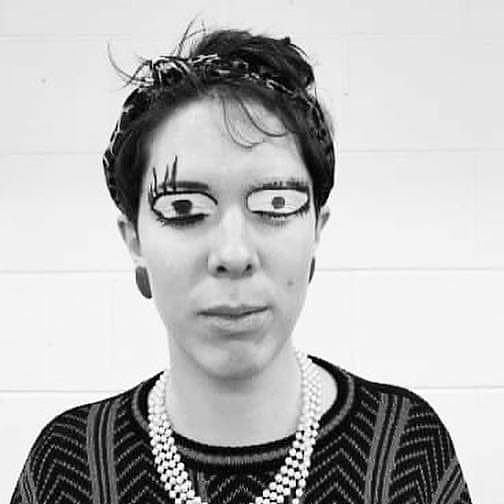
I decided to experiment with face paint as I think I might use this for my performance piece.I created one and and a peer did the other.I think it connects well to the mask people use every day to cover this dehibilitating mental condition

https://drive.google.com/open?id=1Cogd_plrRglgCpaWR13gGSpGZ0g14Agi

The revel!

Digital project Moving through space

In this video I wanted to give a feeling of unease.The blocks of my art I have selected I wanted to represent objects and people moving through time and space.I wanted the scraping noise that I had created by dragging a brick to bring about a feeling of unease before the audience are enveloped into what feels like a black hole whilst Steven Hawkings describes what would happen to you whilst you are in one.When this video is being viewed on a screen the person is also left with a ‘black mirror’ looking at themselves for 55 seconds.Because when everything else in this world is gone they are left only with themself for company which poses the question ‘how comfortable are we with our inner self?’

I still think that this video also links well to my original theme of homelessness because people see you but then you’re gone out of sight and out of mind.

This was my first time using premiere and I feel that it was a pretty sucessful outcome considering.Altho some of the edits on the brick sound could be a little neater.I felt that premiere has an easy visual approach which makes sense in comparison to photoshop and I feel encouraged to use it in the future for future projects