Semester 2 week 9.Photoshop/beach combing.

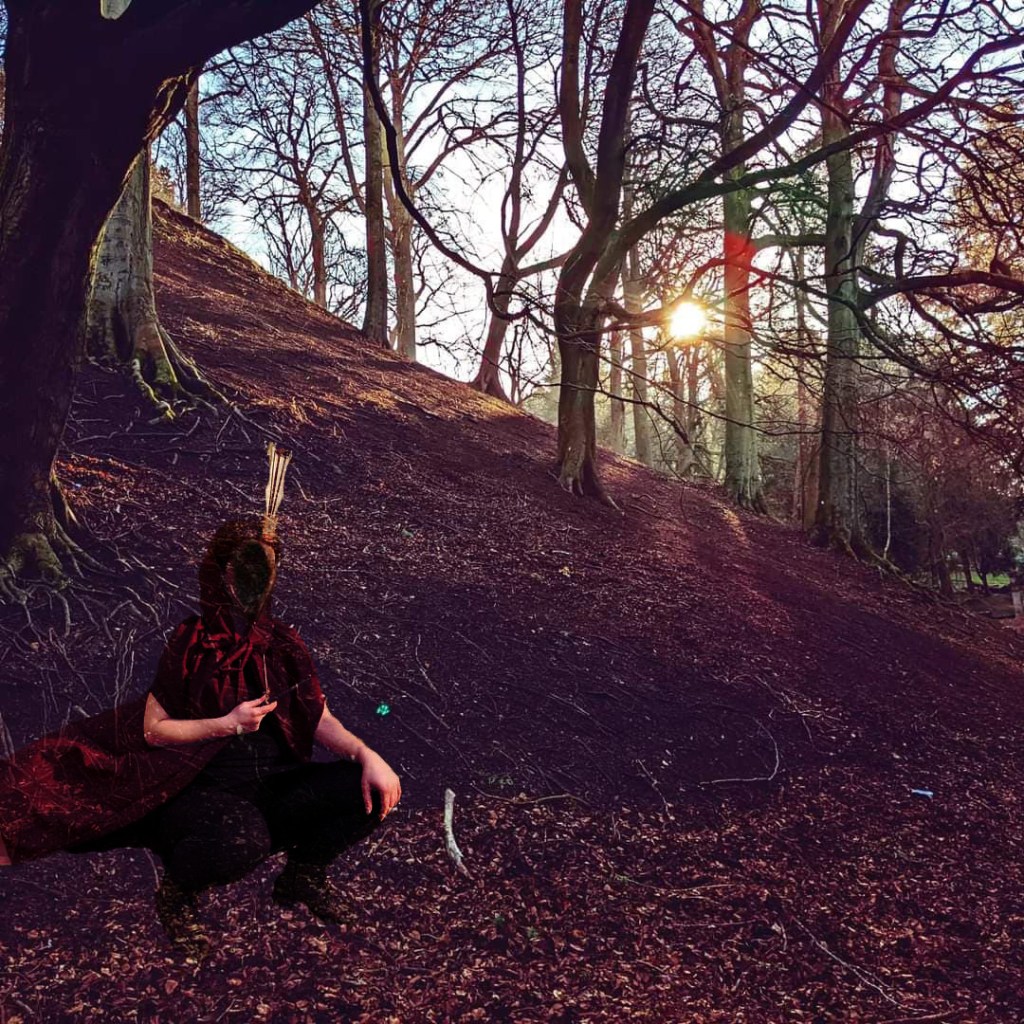
The tree that bleeds.
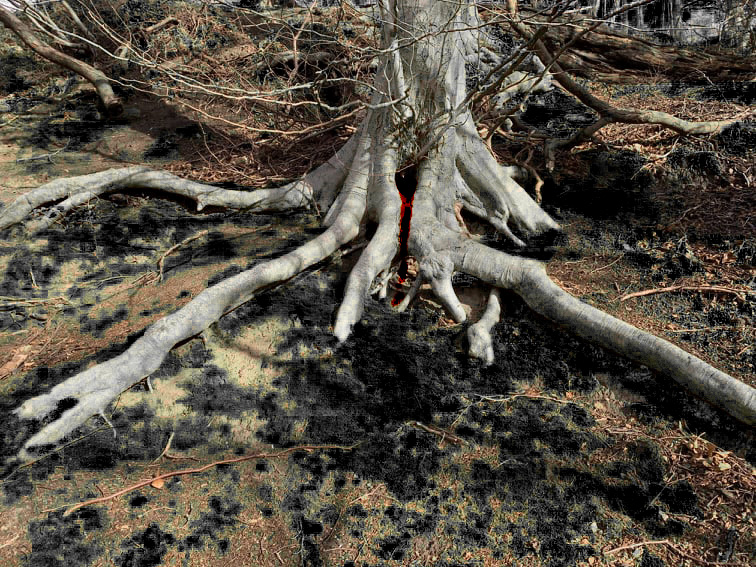
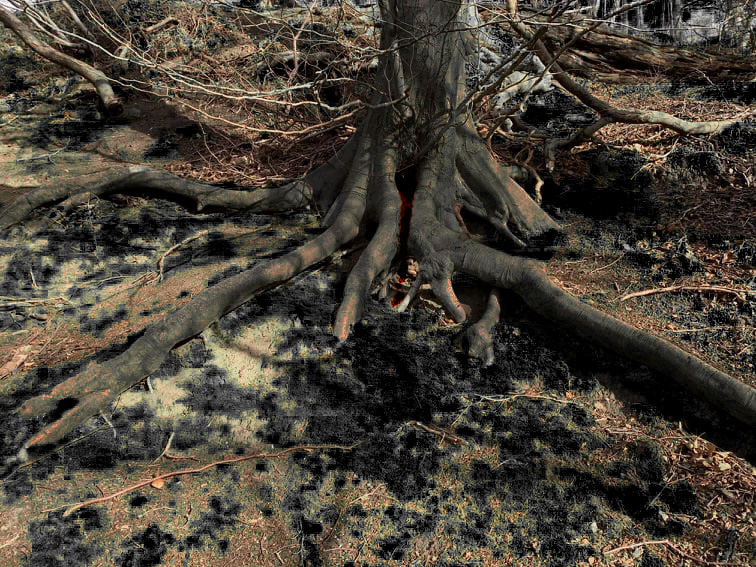
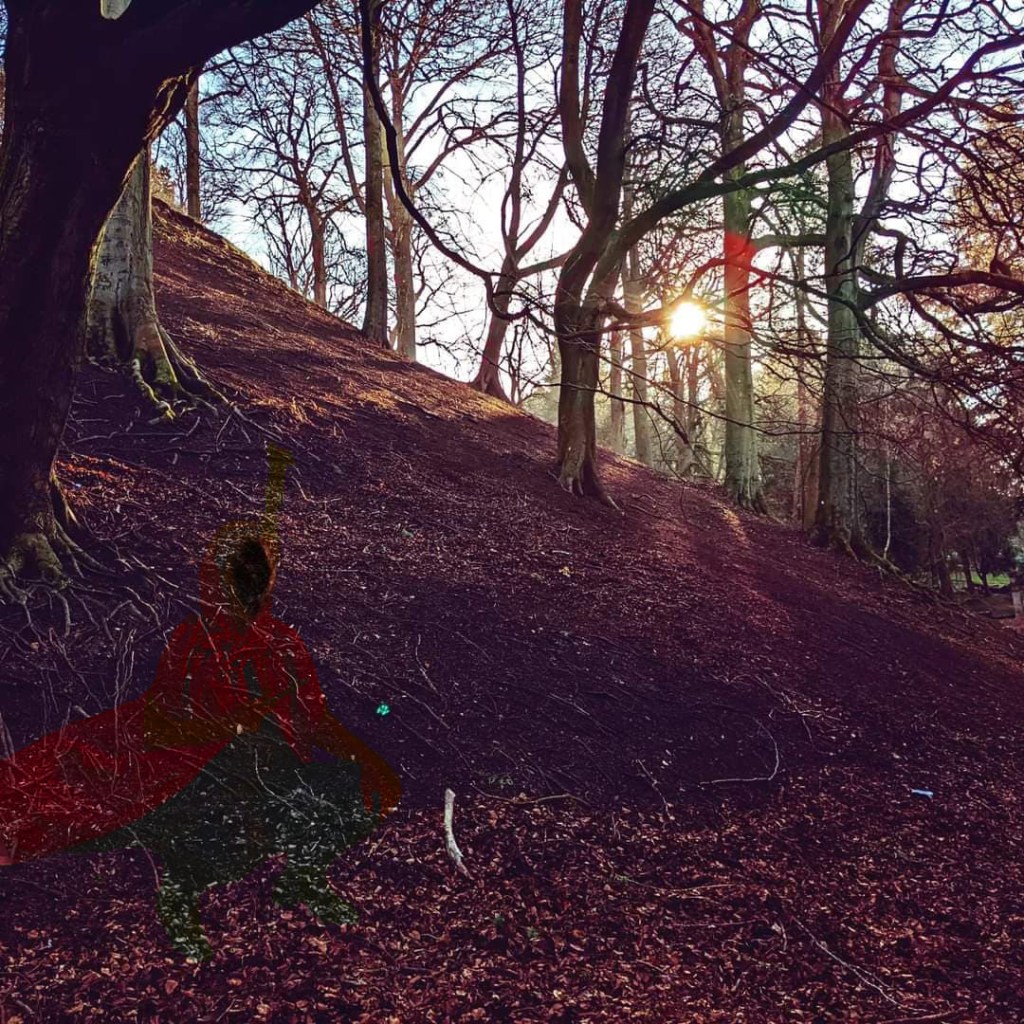
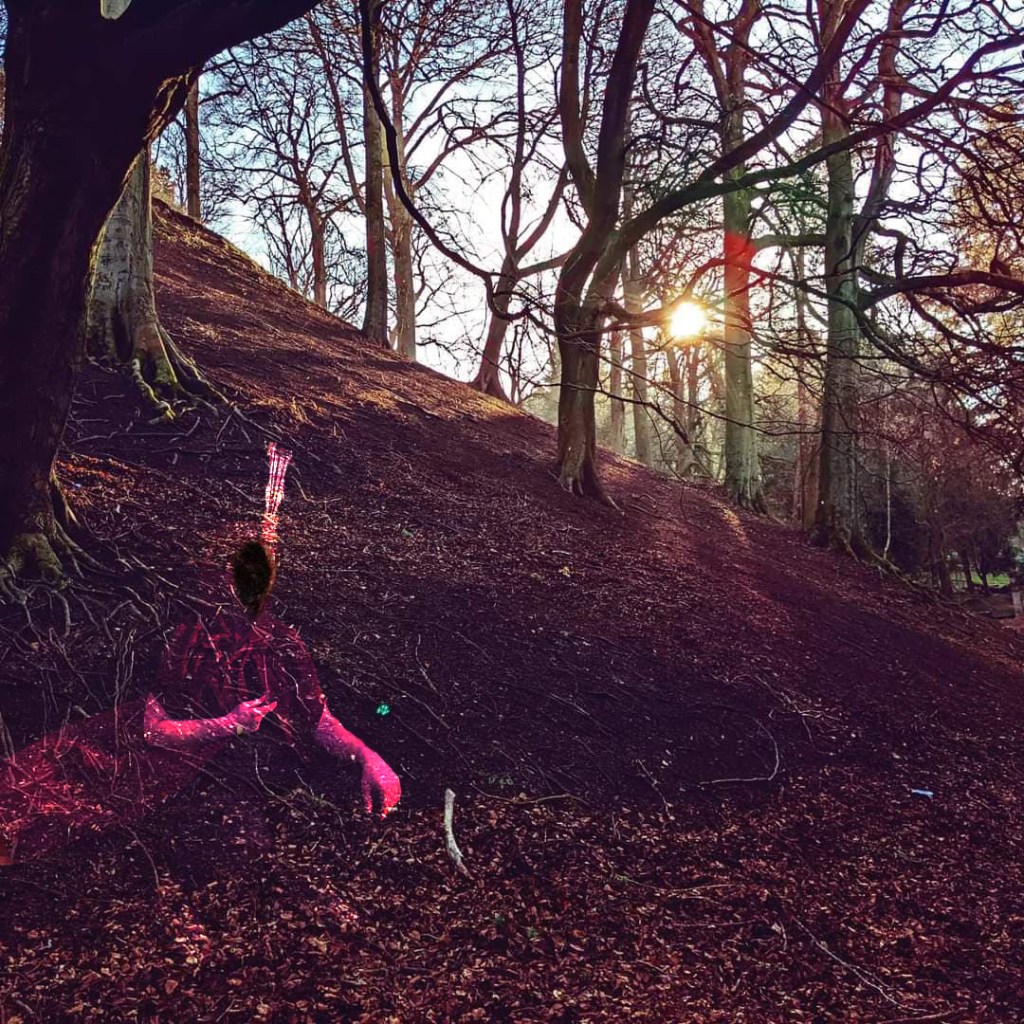
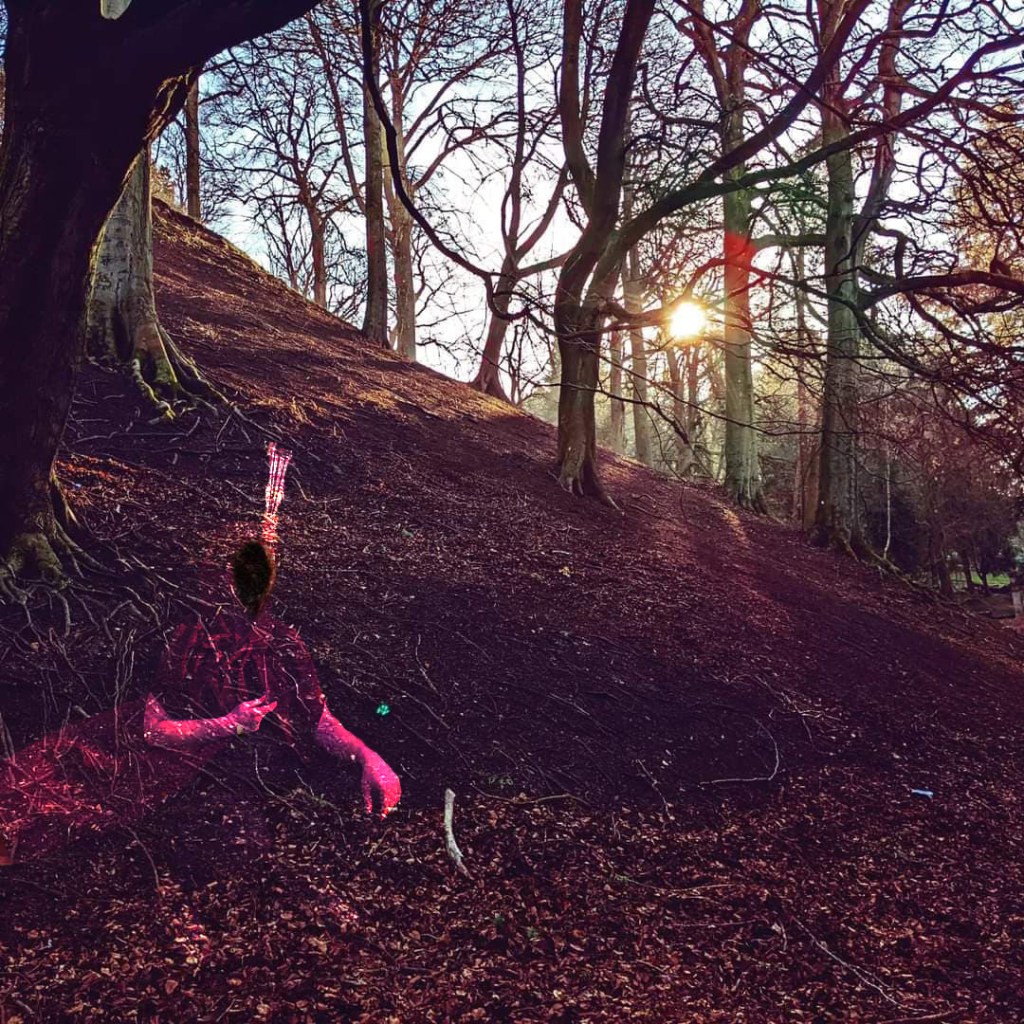
This week I edited some images from photo’s I had taken at Roslyn country park a few weeks ago.I felt inspired by a scene in Pan’s laberynth where Ofelia climbs inside the dark looking tree where a toad lives with a key in it’s mouth.Mixed with ‘The tree of the dead’ in Sleepy Hollow which of the grave of the ‘Headless horseman’ and contains the bodies of all his victims.I felt that the image of this tree would help piece together some of the story telling in regards to the main character.Prehaps this is where she was tortured and once a year the tree bleeds reminding everyone of her final resting place.The white filter on the tree was my favourite as there is a better contrast with the blood.I also altered the colour of garlic grass surrounding the tree to a black looking mould to add to the feeling of decay.

‘The tree of the dead’ containing the victims of the Headless horseman.

A haunting

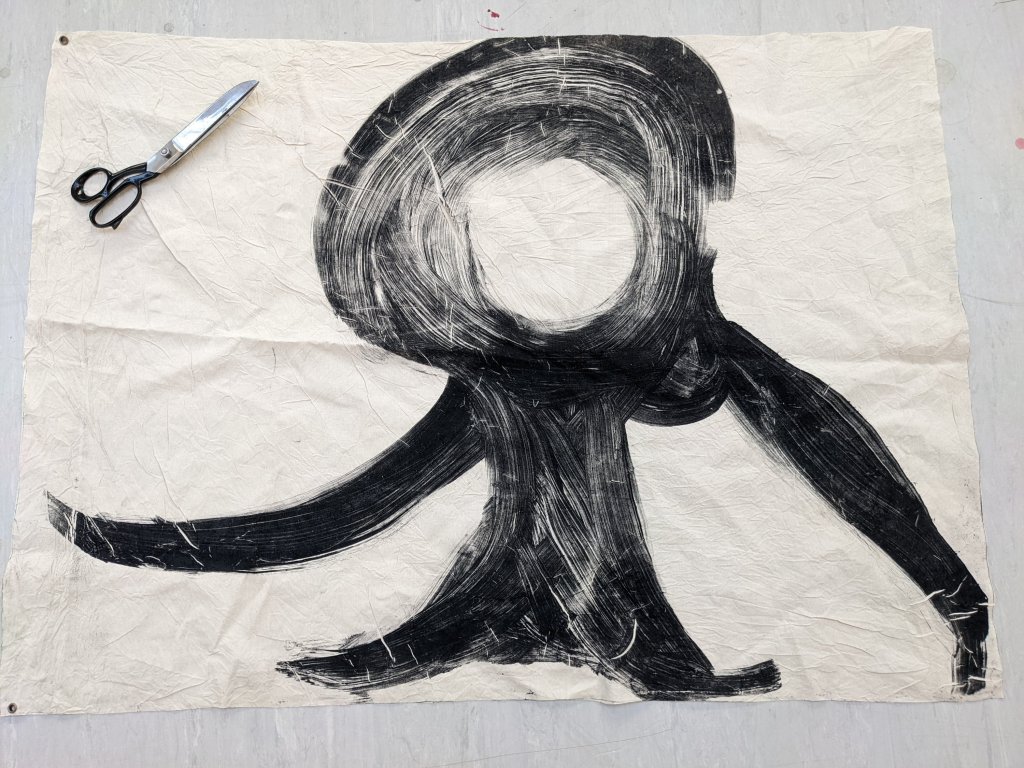
Flag

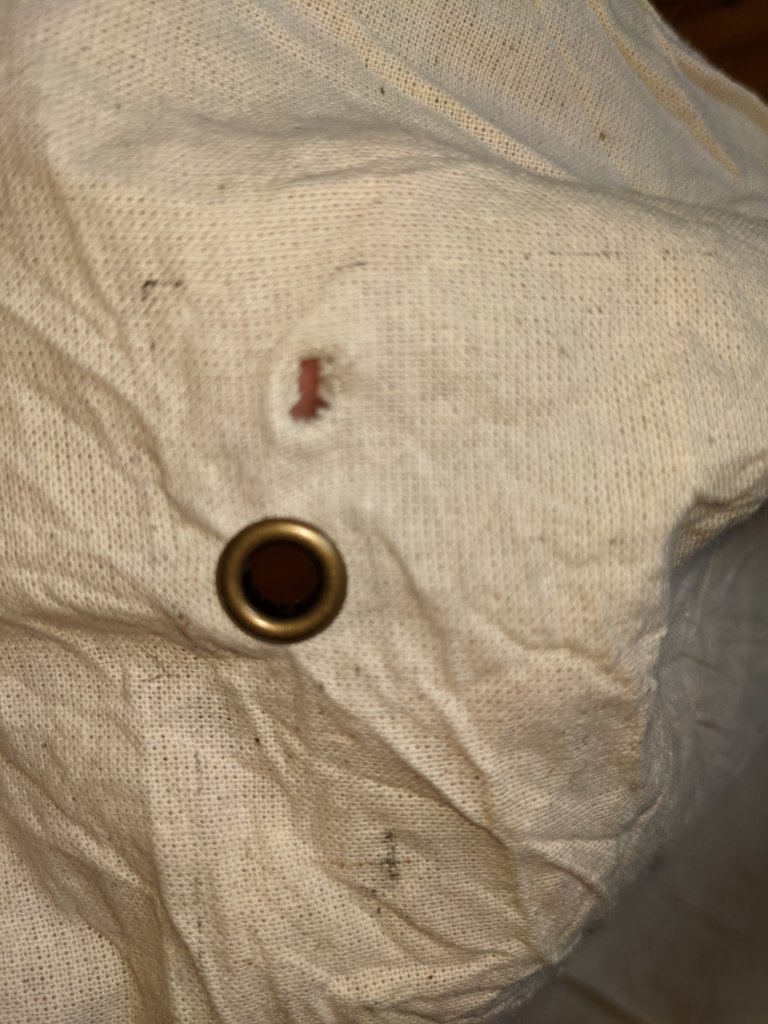
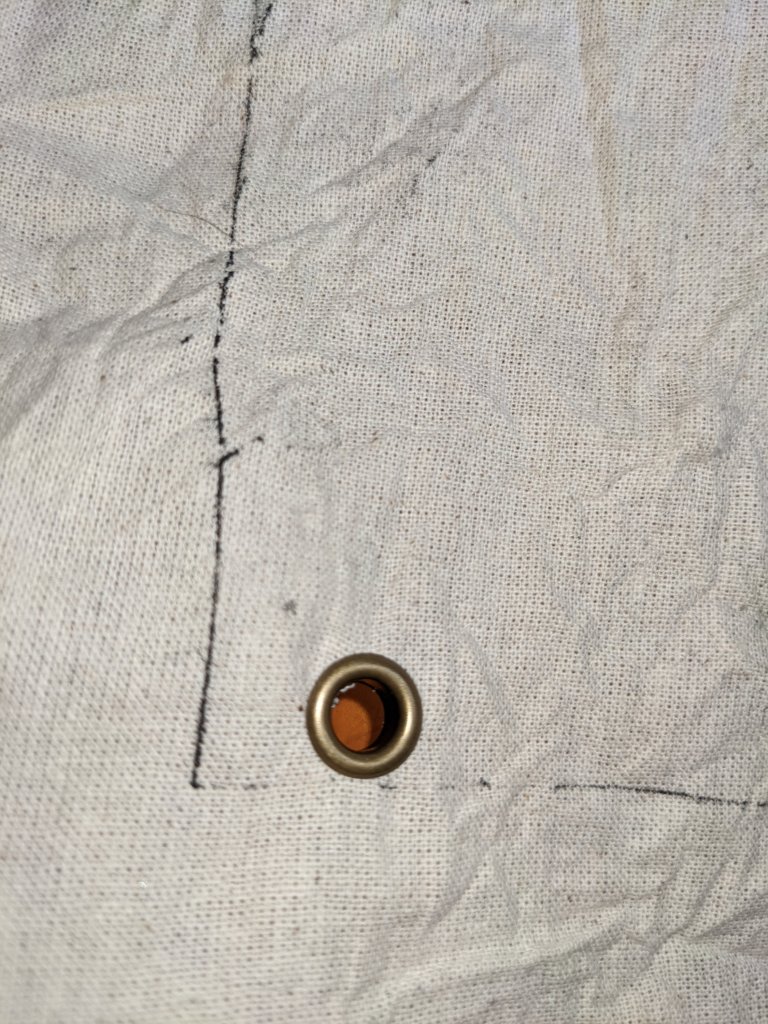
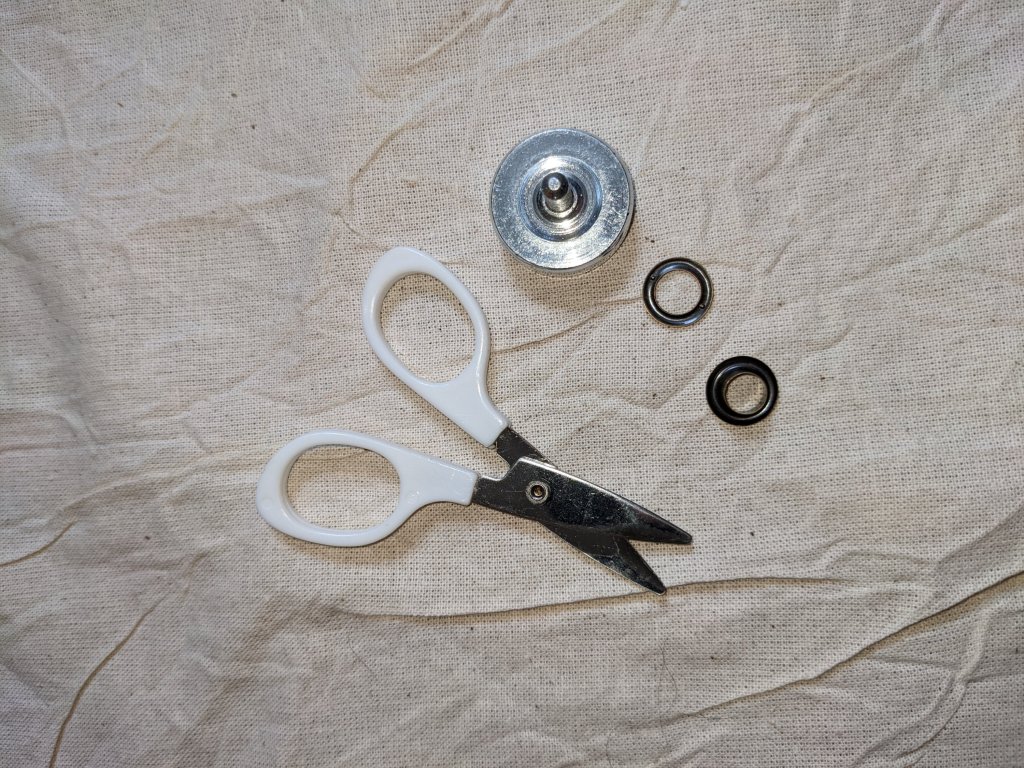
Due to illness,the technician had to cancel the forging of the flag pole for this week but I’m going to try and get booked back in for hopefully next week or the week after.The 4th years have the workshop from the 1st April onwards so hopefully I can get booked in before then!

One of the least patriotic flag making video’s I could find.And the technique seemed the easiest.I drew up a similar design and took it to the technician who agreed.

Found objects

https://youtube.com/shorts/Gj5Sp6IHkVI?feature=share

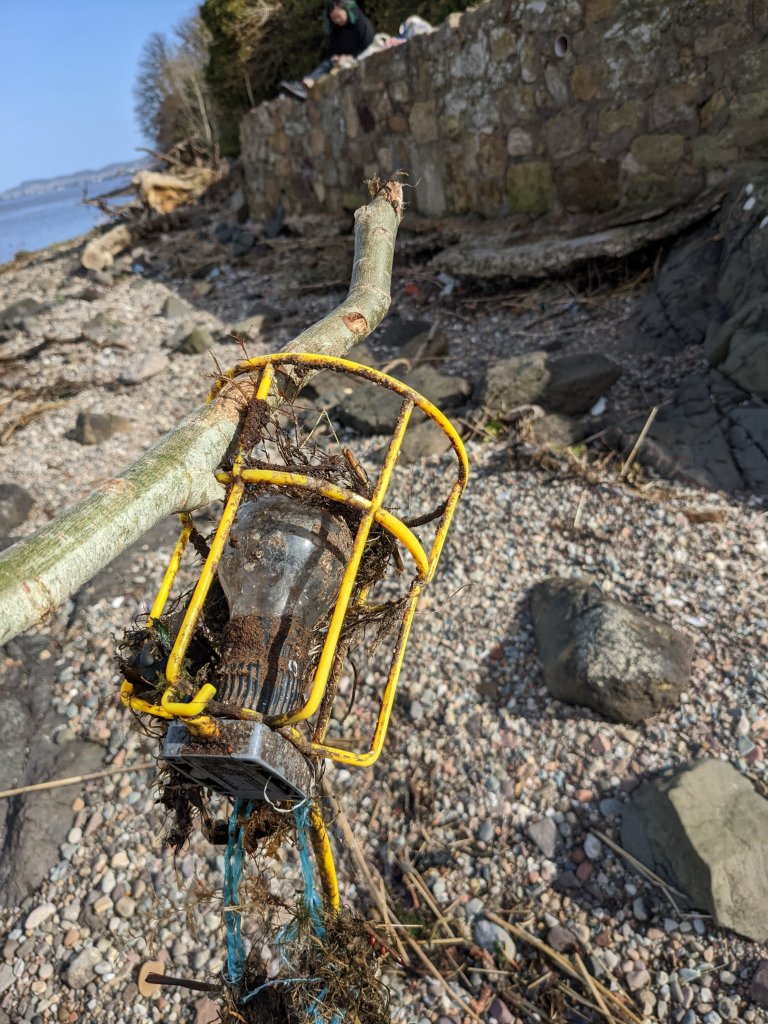
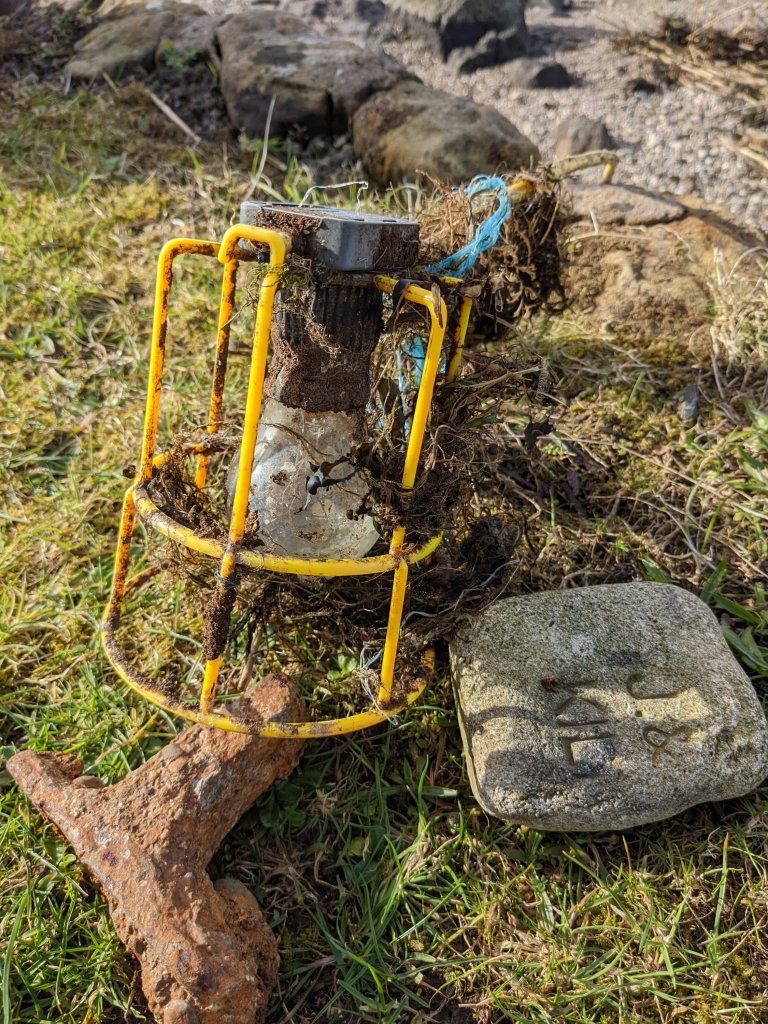
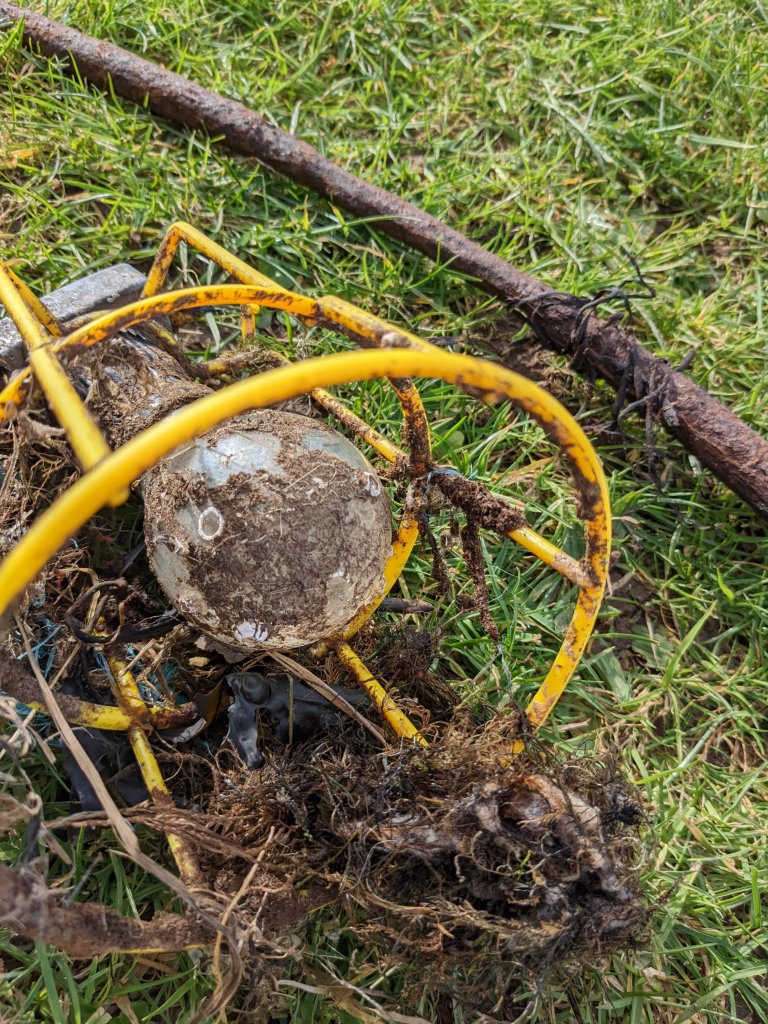
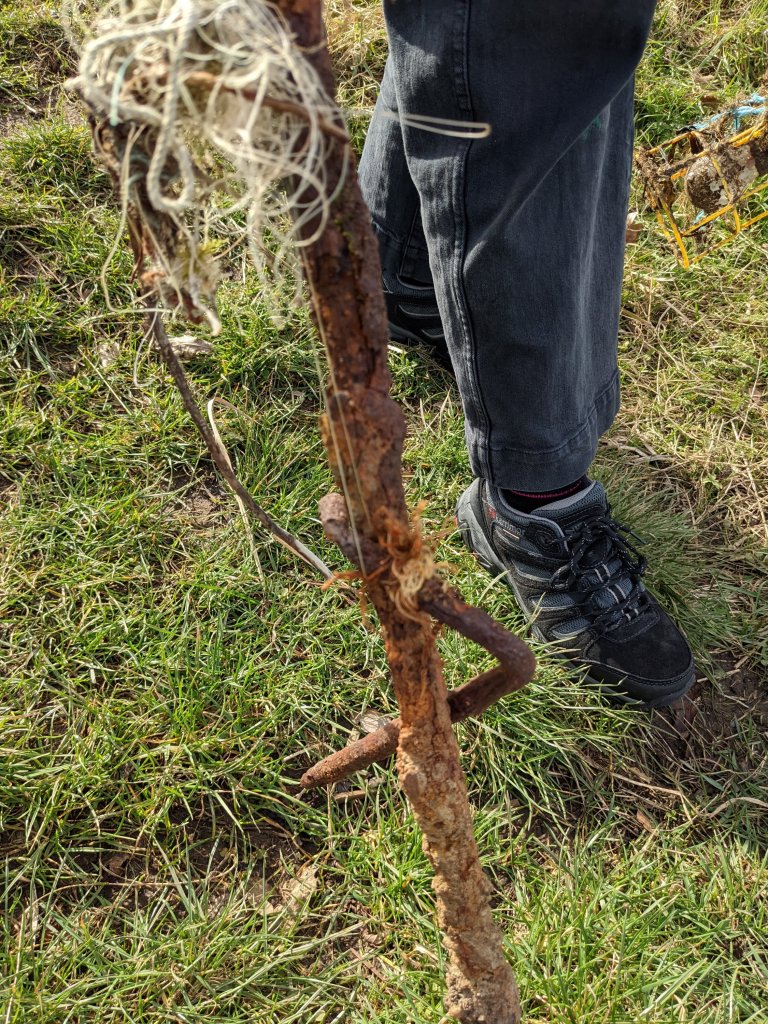
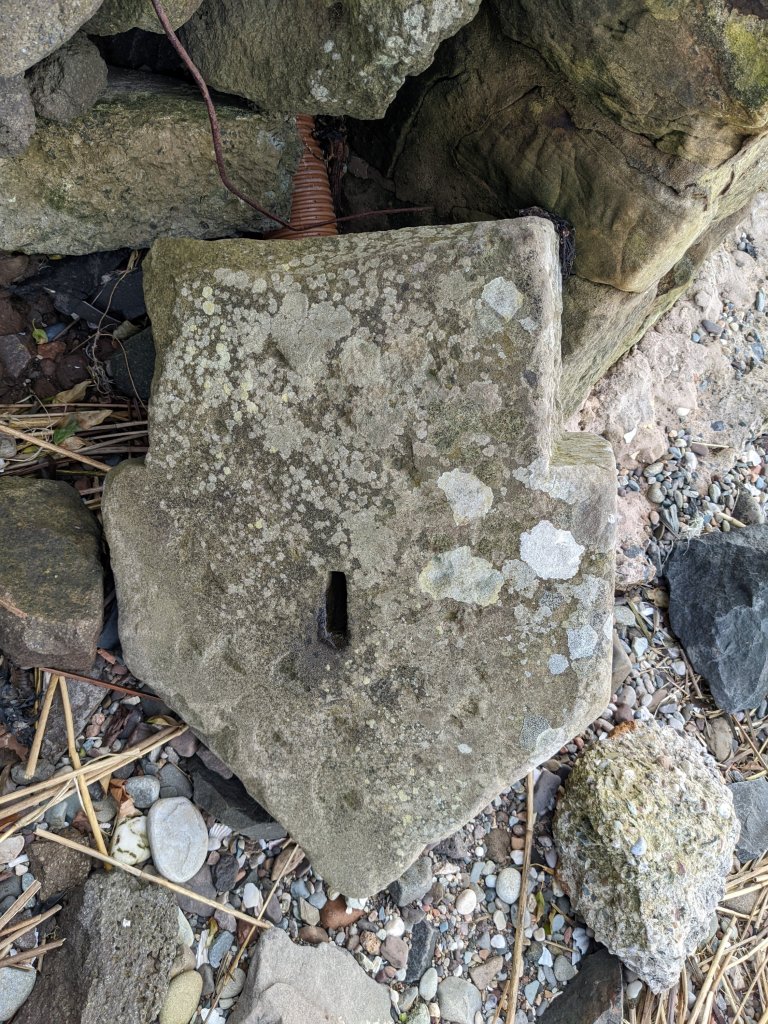
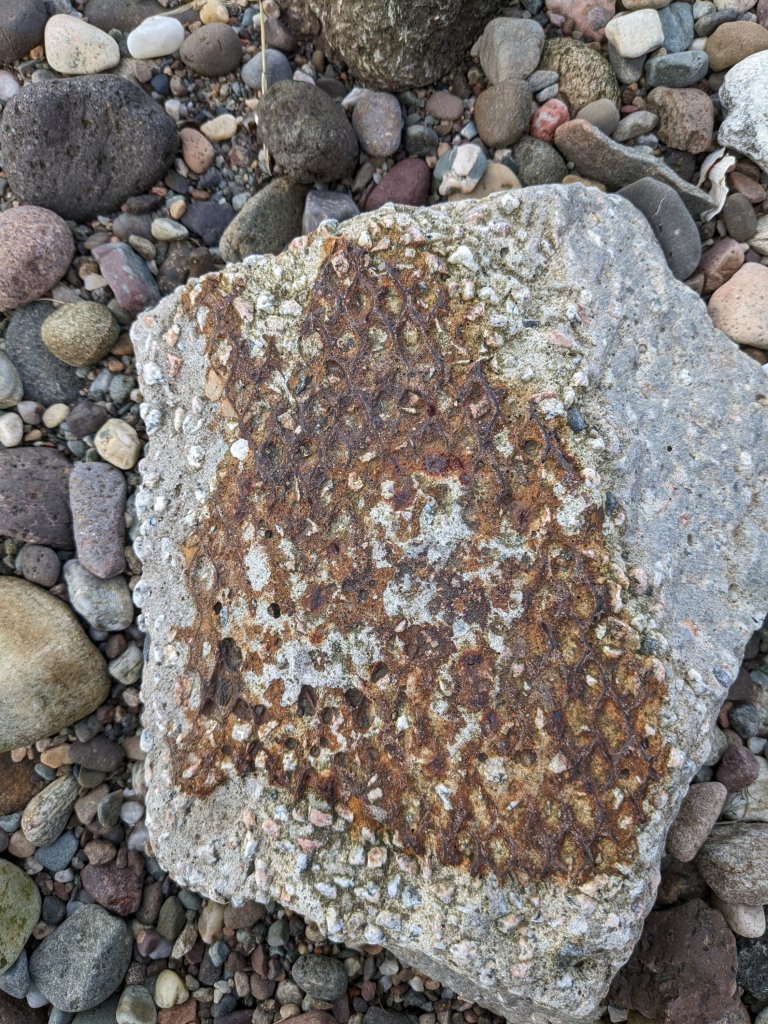
I travelled to Balmerino again on order to beachcomb.The tide was very nearly in but not quite (I keep wrongly judging the tide times online) so I managed to have a quick rumage and somehow pull this light from the beach which must once upon a time of belonged to a ship.Water had entered the lighbulb and it had little growths on the bulb also which made it all the more interesting!I feel that adding the lightbulb as a found object will give more of a ‘dystophian’ theme as i feel that everything else that i have made is more medevil.
1 to 1 tutorial and written work.

This week I decided to have a 1 to 1 with the amazing Maria Fusco,her advice really pointed out what my work had been missing,a stronger narrative, Maria posed the question; ‘Are we visting The Red Lady or is she visting us?And that since the Red Lady doesn’t have a voice what about visiting one of the locations I have been to and doing some impromptu writing?So I wrote the following;

Underground.

The damp moist leafs.The smell of dirt rich in my nostrils.The smell of pine needles my only relief.

I scream,the birds fly.

These creatures, they reach unbelievable places,

Don’t.

The box is too tight.

But that’s the point, isn’t it?

Discomfort,pain,agony and torture because I felt too much pleasure. I felt too alive and now they want me dead.

My legs are bound. No such thing as wriggle room.

I had too much wriggle room.

My head is caged so they can hear my screams.

They.

Females,women,girls.

And god forbid the animals should cause such a racket.

My face is hot.

The cage is heavy.

I try to kick the top of the box with my bound legs.

Of course, they made it too high.

The creatures itch, they tear at my skin.

I welcome death now,

I demand death now.

But I also demand

HIS.

The Cage.

The cage.The dreaded cage.The cold hard steel weighs heavy on my limbs.My view is partial.

Too many friends,

Too joyus.

He never had any.

I did.

My hands are blue.

I don’t talk now.

My throat is seared with heat.Dry hoarse heat.

This death is too long.

It’s night now.

Or is it?

My hands are heavy.

Pulling.Something is pulling.

Is he coming back for me?

Please don’t.

My ribs, piercing like sharpened daggers straight into my lungs.

The rope is too tight.

Mock me.That’s okay,it reminds me I’m still alive.

I’m cold

My ribs hurt

My hands are heavy

I don’t forget.

We also talked about how my work would be displayed in an exhibition context and how would the red lady visit?By the touching/moving of these artifacts do we bring her alive?Is she upset by changes in her environment? No matter what decade in which they should occur?Maria also suggested that aswell as having the artificats laid out and the video’s playing what if she enters the room and paints on the wall with the twine/straw.The item is then left aswell as the painting telling part of her story and adding to her own personal narrative and Maria also posed the question how would she of been able to paint herself in the other paintings that i had done.How would she know what she looked like?And that prehaps these paintings were best left as records of what happened by locals adding to the story.

Maria mentioned the playwright Pirandello Web and his play ‘six characters in search of an author’In this play the characters visit the audience in search of an author to make their characters more ‘complete’Prehaps the Red lady will visit the audience in order for the audience to give her her ‘voice’ by understanding her paintings.
Maria had suggested one of her own pieces of work ‘Master rock’ mainly due to all the different elements that came together to create this ‘experimental drama’ it was interesting to think of all the different narratives combined from the poetry to using the narative of a survivor called a ‘tunnel tiger’ who dug through the mountain and was the only person to survive,to an artistical mural and a musician as the voice of the Master Rock. It made me wonder if prehaps I could bring spoken word back in and prehaps use it over the videos.

Another person mentioned was the writer Ursula K. Le Guin and her science fiction based short stories ‘The Buffalo Girls’ which features a dystophian world and a play which is currently on at the Royal Court.
The play features a woman in a windowless cell in an Asylum in 1863,the audience visits her there where she has no memory of whom she is and becomes the accomplice of a medium who requires a new assistant.Altho I like this narrative I think that it’s all too common that we visit the character and what is expected instead of the character visiting us which changes the whole dynamic.

Group Crit for 3D Practice

(Forgot to get a photo of the piece with the projection)

I think the feeback was overall positive for my crit,I had spent almost half a day prior experimenting with the positioning of the projector.Initially I wanted the projection of my video to be above my sculpture.Whenever I tried to angle the projector in order to do this the projection ended up squint.I then wondered what the projection would look like projected onto the sculpture and around it.Altho I was unsure of this to start with this seemed to be a sucess at the crit and recieved positive feedback.At my pervious feeback it was mentioned to me prehaps projecting onto the headpiece.I tried many differents ways of trying to do this from projecting from the other end of the room to trying to bring the size down on the projector itself but this did not seem poisible.I also think (from partially seeing some of the projection on the headpiece) that even if i was able to bring the video down to the size of the headpiece it would be so distorted that I don’t think it would of been visable and it was important to me that the video was fully visable.

Feedback.

  • It was mentioned by tutors and peers that they prehaps would not of dipicted the meaning as being about PTSD.The teacher questioned if this was actually important that the meaning was known and that prehaps it should challenge peoples thinking into making up their own minds about it also that the video had a ‘hook’ which kept the viewer interested in it and as a stand alone piece.
  • Aesthetic experience was a success
  • I should explore the video aspect further prehaps looking into more sensory aspects such as sound.Also how else can I show the mental aspects of weight in a physical sense?
  • I should prehaps of doccumented the making of the headpiece especially the binding of the thread.
  • The tutor also commented that this was a breakthrough project.

Vladimir Tatlin

Tatlin was born 28 December 1885-31 May 1953  he was a Russian and Soviet painter, architect and stage-designer. Tatlin became famous as the architect who designed The Monument to the Third International, more commonly known as Tatlin’s Tower , which he began in 1919. With  Kazimir Malevich he was one of the two most important figures in the Soviet avant-garde art movement of the 1920s, and he later became an important artist in the Constructivist movement.

‘Monument to the 3rd international’1920

In 1905 he starts and in 1910 successfully completes his studies at N.Selivestrov Penza Art School in Penza. During the summer vacations he travels to Moscow and St.Petersburg to participate in various art events. In 1911 he resettled to Moscow to live by his uncle and began his art career as an icon painter.

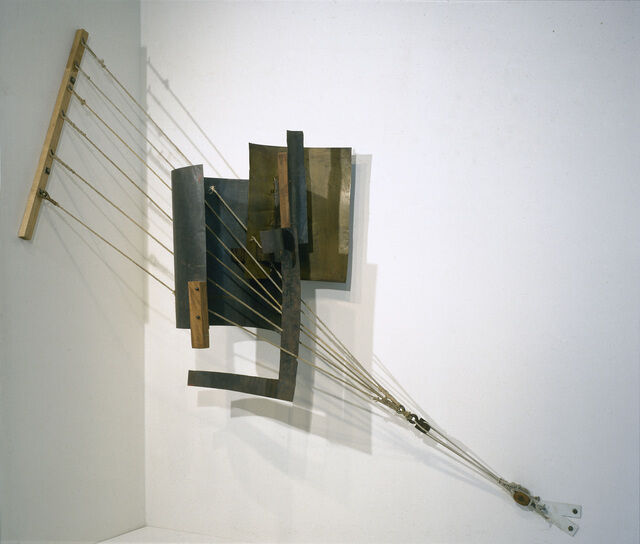
‘Corner Counter Relief’ 1914

Tatlin achieved fame as the architect who designed the huge Monument to the Third International, also known as Tatlin’s Tower. Planned from 1919,the monument was to be a tall tower made from iron glass and steel which would have dwarfed the Eiffel Tower in Paris (the Monument to the Third International was a third taller at 400 meters high). Inside the iron-and-steel structure of twin spirals, the design envisaged three building blocks, covered with glass windows, which would rotate at different speeds (the first one, a cube, once a year; the second one, a pyramid, once a month; the third one, a cylinder, once a day). For financial and practical reasons, however, the tower was never built.

Tatlin was also regarded as a progenitor of Soviet post-Revolutionary Constructivist art with his pre-Revolutionary counter-reliefs, three-dimensional constructions made of wood and metal,some placed in corners (corner counter-reliefs) and others more conventionally. Tatlin conceived these sculptures in order to question the traditional ideas of art, though he did not regard himself as a Constructivist and objected to many of the movement’s ideas.

Zoe Leonard (Artist Research)

‘Strange fruit'(for David)

Born 1961 in Liberty New york.Age 16 she dropped out of school and started taking photographs.Living in New york provided the subject matter for many of her works (apartment buildings,store fronts,sidewalks,chain link fencing,graffiti ad boarded up windows.She works primarily with photography and sculpture. She has exhibited widely since the late 1980s and her work has been included in a number of seminal exhibitions including Documenta IX and Docunenta XII and the 1993, 1997 and 2014 Whitney biennials.

Alot of Leonard’s work reflects on the framing, classifying, and ordering of vision. She explained in a recent interview: “Rather than any one subject or genre (landscape, portrait, still life, etc), I was, and remain, interested in engaging a simultaneous questioning of both subject and vantage point, the relation between viewer and world.Basically, subjectivity and how it informs our experience of the world.”

Leonard was active in AIDS advocacy and queer politics in New York in the 1980s and 1990s. In 1992 she wrote “I want a president”, a poem inspired by Eileen Myles’s run for president.

‘a f a s i a’

In 1995 she staged an exhibition at her studio on the Lower East Side of Manhattan which featured the work Strange Fruit, an installation of various fruit skins (oranges, bananas, grapefruits, lemons) that Leonard saved and then sewed together by hand with wire and thread. Strange Fruit grew out of a deeply personal response to the losses of the AIDS epidemic and as a meditation on mourning, it became a seminal work of the 1990s. Strange Fruit was exhibited in 1998 at the Philadephia Museum of Art , where it currently resides

Louise Bourgeois (Artist Research)

‘Maman’

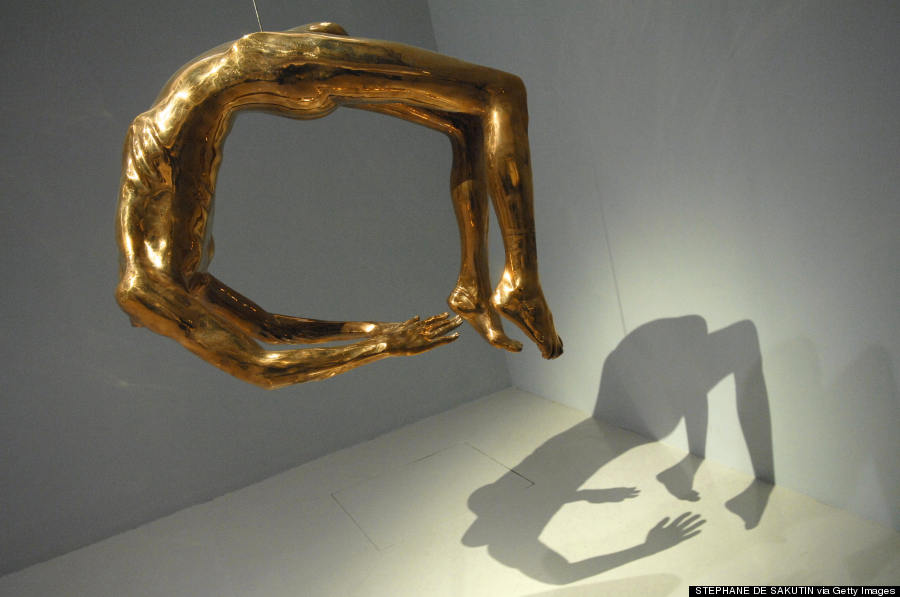
Born 25 December 1911 – 31 May 2010) she was a French-American artist. Although she is best known for her large-scale sculpture and installation art, Bourgeois was also a well known painter and printmaker. She explored a variety of themes over the course of her long career including domesticity and the family, sexuality and the body, as well as death and the unconscious.These themes connect to events from her childhood which she considered to be a therapeutic process. Although Bourgeois exhibited with the Abstract Expressionists and her work has much in common with Surrealism and Feminist Art, she was not formally affiliated with a particular artistic movement.

She was the second child of three born to parents Joséphine Fauriaux and Louis Bourgeois. She had an older sister and a younger brother. Her parents owned a gallery that dealt primarily in antique tapestries.

Her mother died in 1932, while Bourgeois was studying mathematics. Her mother’s death inspired her to abandon mathematics and to begin studying art. She continued to study art by joining classes where translators were needed for English-speaking students, in which those translators were not charged tuition. In one such class Fernand Leger  saw her work and told her she was a sculptor, not a painter. Bourgeois took a job as a docent, leading tours at the Musee de Louvre.

Louise Bourgeois’s work is powered by confessions, self-portraits, memories, fantasies of a restless being who is seeking through her sculpture a peace and an order which were missing throughout her childhood

‘Echo IV’

Rebecca Horne (Artist Reserch)

Rebecca Horne

Rebecca Horne is a German visual artist (born 24th March 1944, Michelstadt, Hesse) (currently lives and works in Paris and Berlin)

Horne is from a generation of German artists who came to international prominence in the 1980’s. She practices Body art, performance art, installation art, sculpture and film. She also writes poetry which is influenced by her work. And sometimes creates work which is influenced by the poetry.

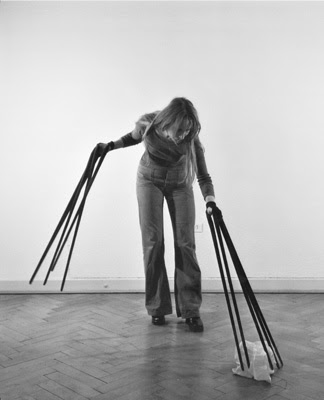
As well as this Horne creates bodily extensions or modifications. with padded body extensions and prosthetic bandages. In the late sixties she began creating performance art and continued to use bodily extensions

One of her well-known body modifications known as Einhorn (unicorn) the theme for this being the person’s contact between themselves and his/her environment.

Horne spent most of her late childhood in boarding schools and at nineteen rebelled against her parents’ plan of studying economics and decided to instead study art. In 1963 she attended the Hochschule fur bildende Kunste Hamburg (Hamburg Academy of Fine Arts). A year later she had to pull out of art school due to working with glass fibre without a mask. She contracted lung poisoning and remained for a year in a sanatorium after her parents had died also.

This experience gave her a heightened sensory awareness which was projected into her early performances such as ‘Due to her illness having such a hold over her she could only work with softer materials such as coloured pencils which are still her favourite drawing tool.

As she slowly broke out of her isolation she started to create sculpture and strange extensions with balsa wood and cloth whilst lying in in bed. Her goal being to rid herself of her loneliness by communicating through bodily forms.

Many of her works explain the double meaning in the idea of lenses One would think that a large tinted lens exists for protection and cover, but it also has the effect of drawing attention to the person or figure behind it. The paradox of looking out and looking back is explored in her installation piece for Taipei 101, Dialogue between Yin and Yang (2002). The work sets up interactions between viewers, environment and sculpture as it uses binoculars and mirrors to suggest the passive and active energies.

Image result for rebecca horn Einhorn
‘Finger Gloves’ 1972
Image result for rebecca horn Einhorn
‘Pencil Mask’ 1944
Related image
‘Body extension’