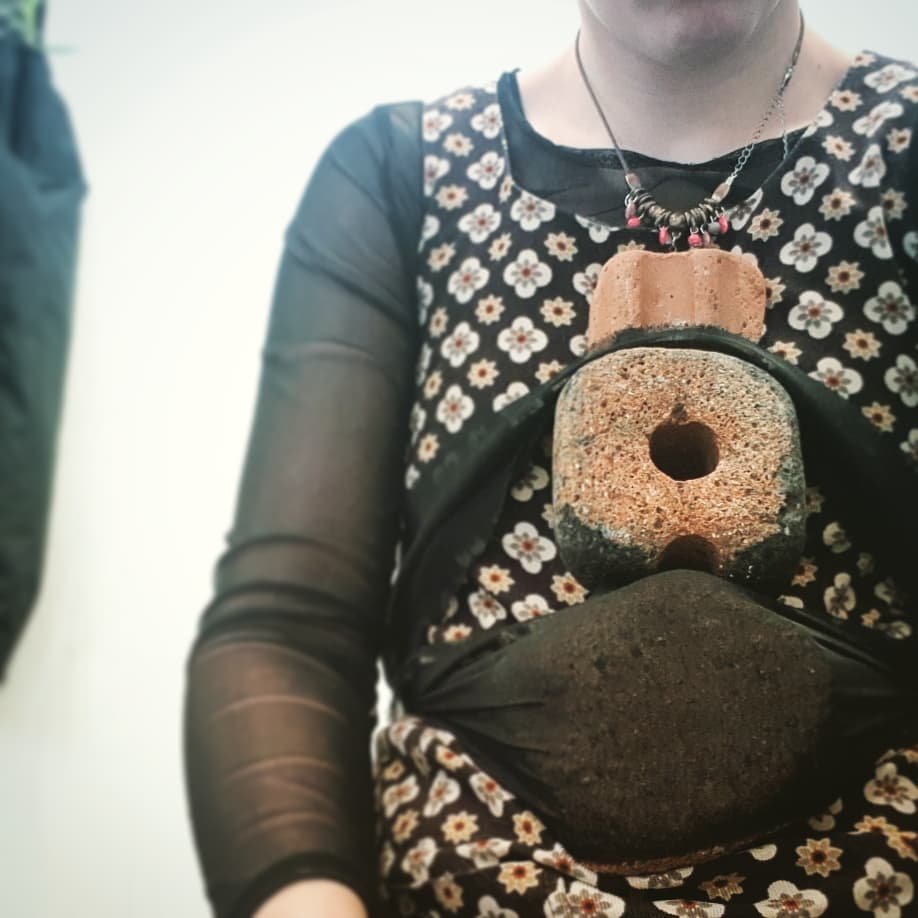
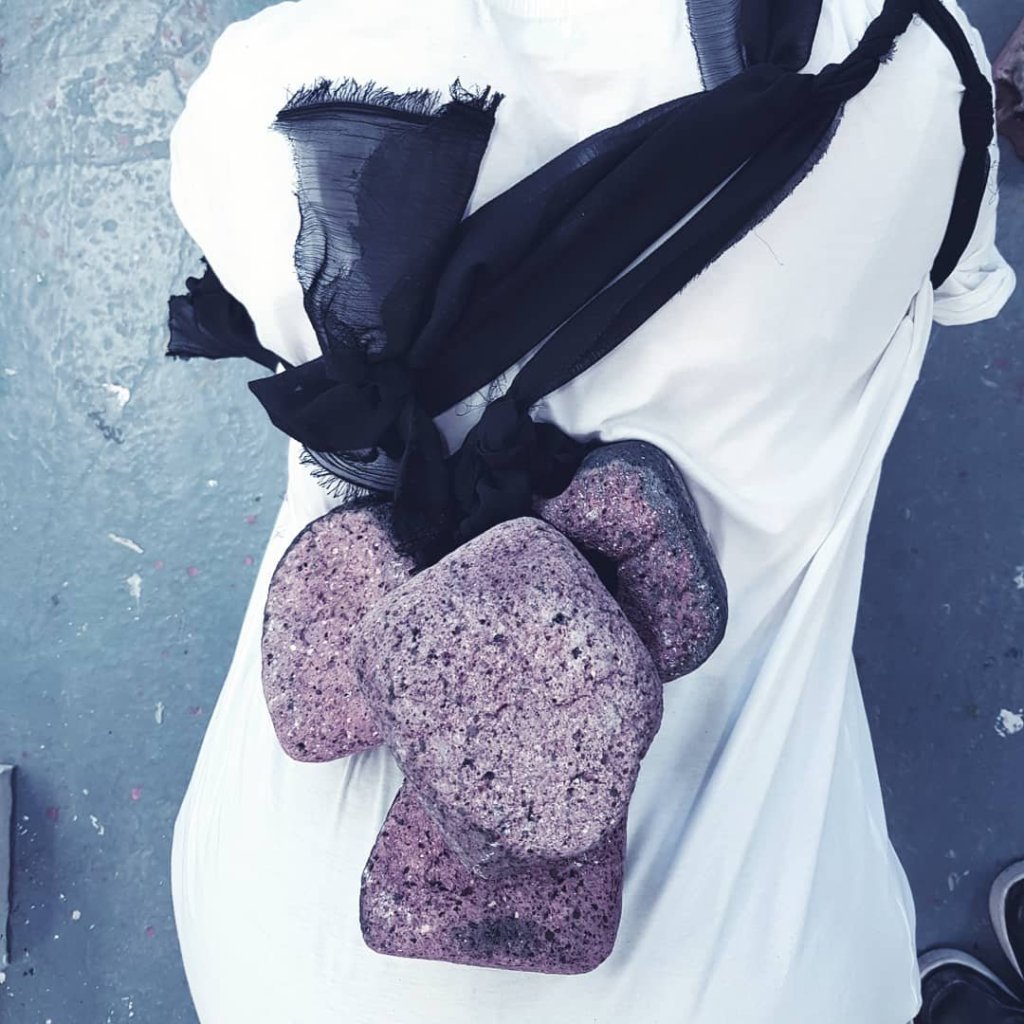
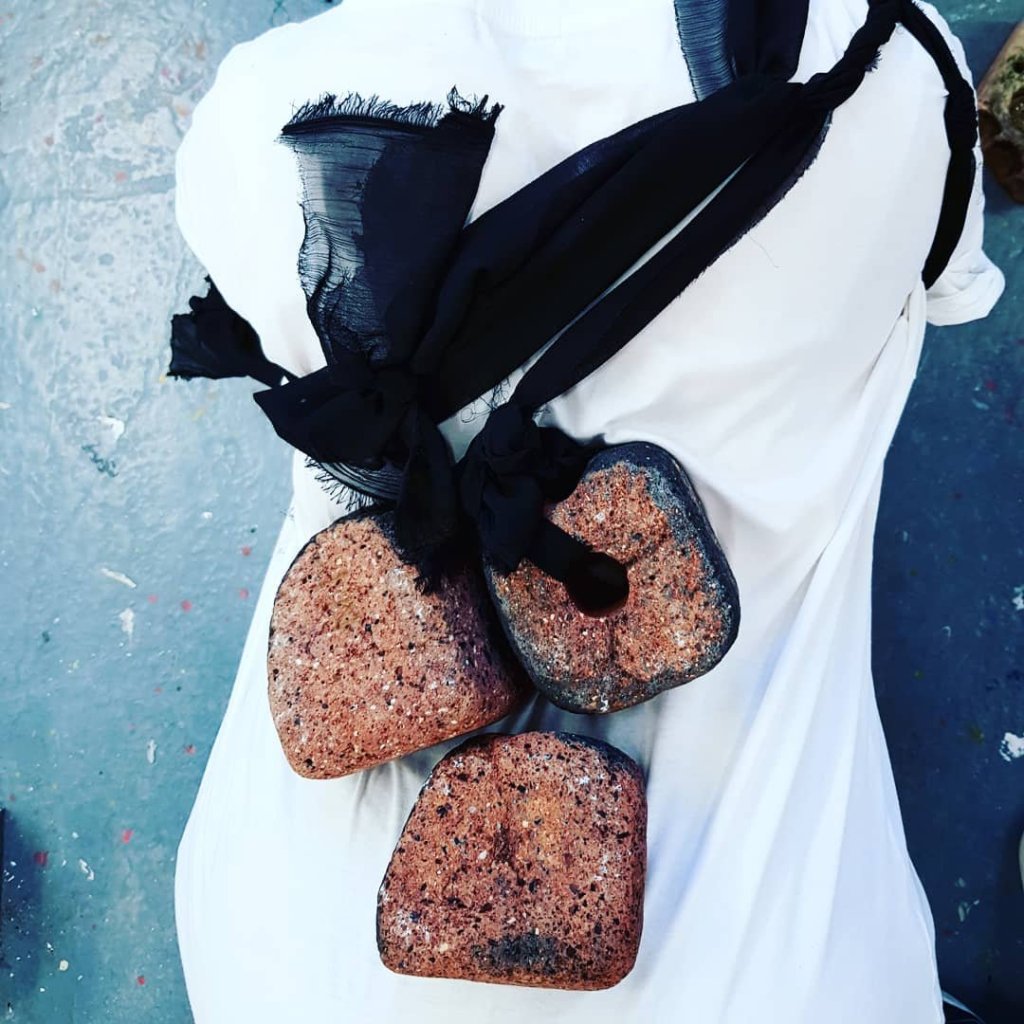
I decided to look at weight bearing with bricks again.And how weight bearing on different parts of the body can not only be a physical thing which we can see such as a pregnancy etc but mental weight can effect different elements of the body also giving way to different conditions such as IBS.
In the following video’s i looked at balancing weight on different parts of my body and the unpredictability of it.I felt a slight anxiousness never knowing what would drop when.
In the second video i thought about how weight from our minds can travel to certain parts of the body.Without really thinking about it we are adding weight to our own backs as stress can cause related pain within our bodies.Studies have shown that increased levels of the stress hormone cortisol can cause related pain within our bodies.
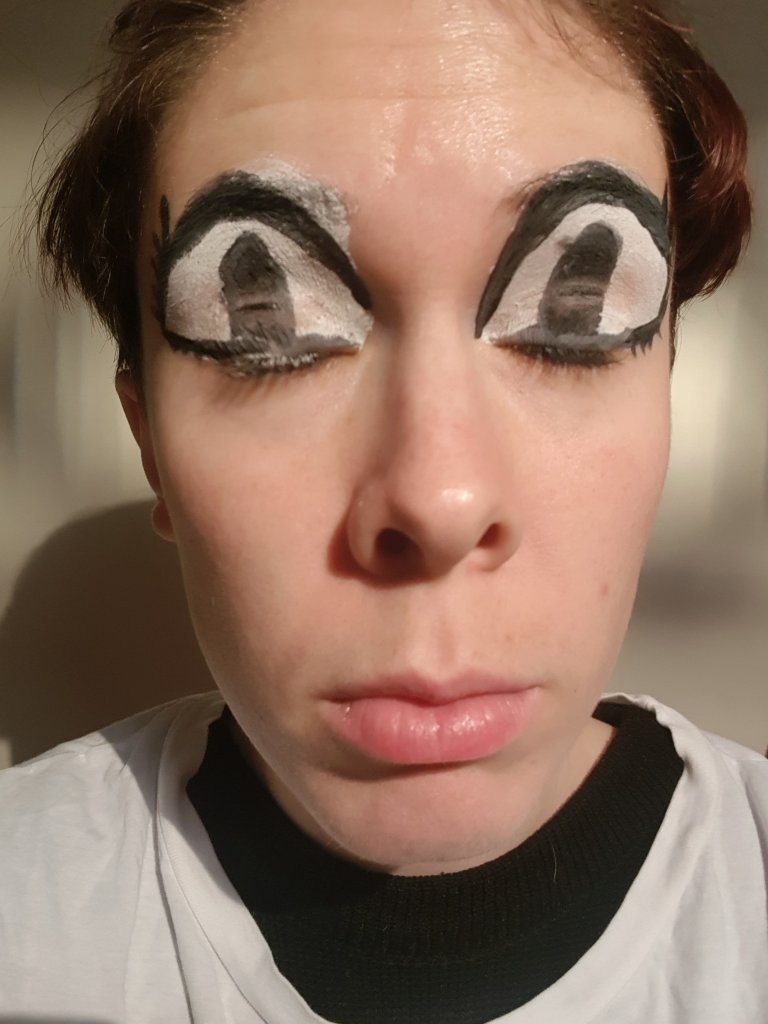
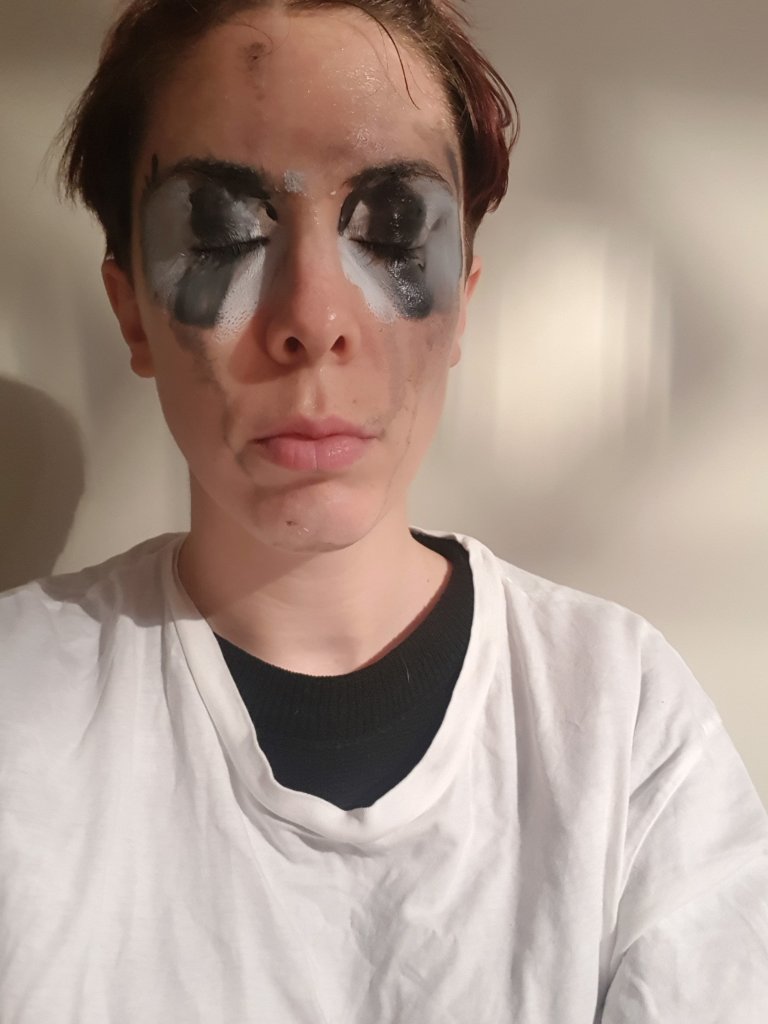
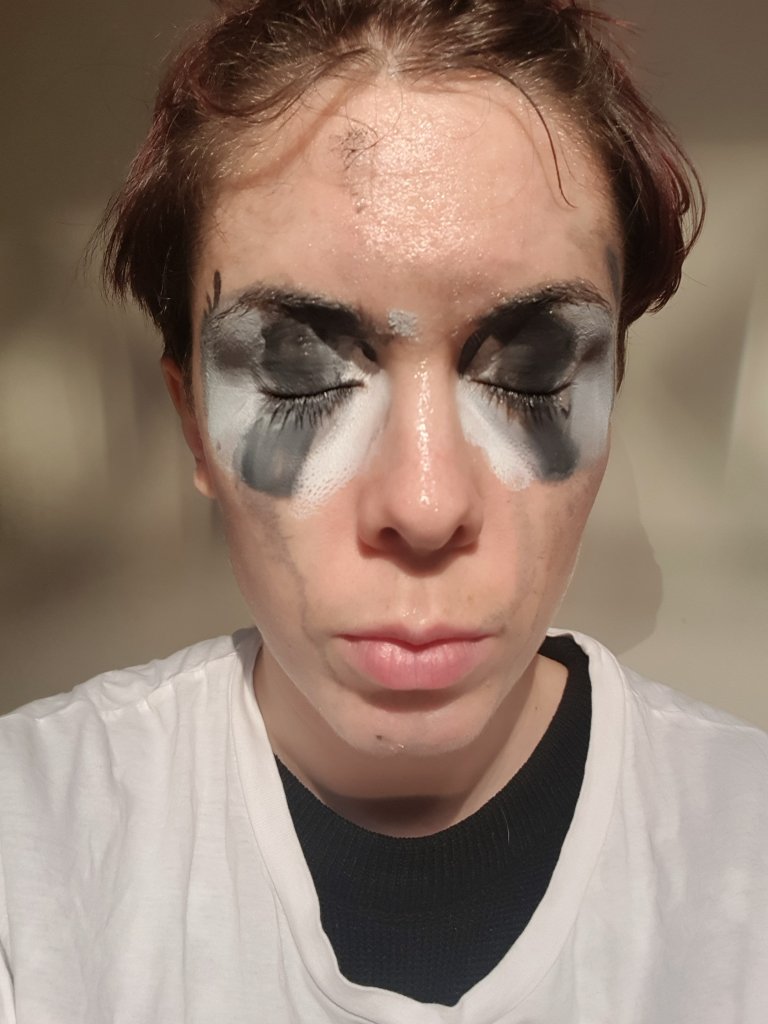
Using face paint I decided to look at the mask people use every day to cover up the weight bearing on their mind. this can either be through make-up or facial expression.A mask to show how awake they are when there mind has shut down
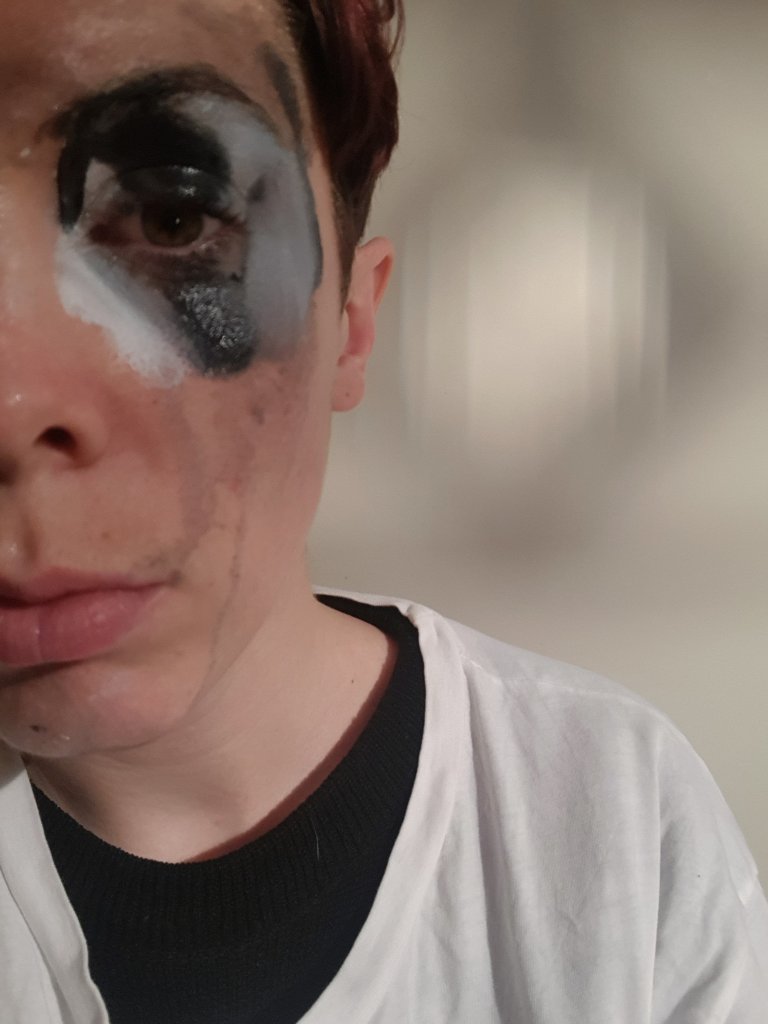
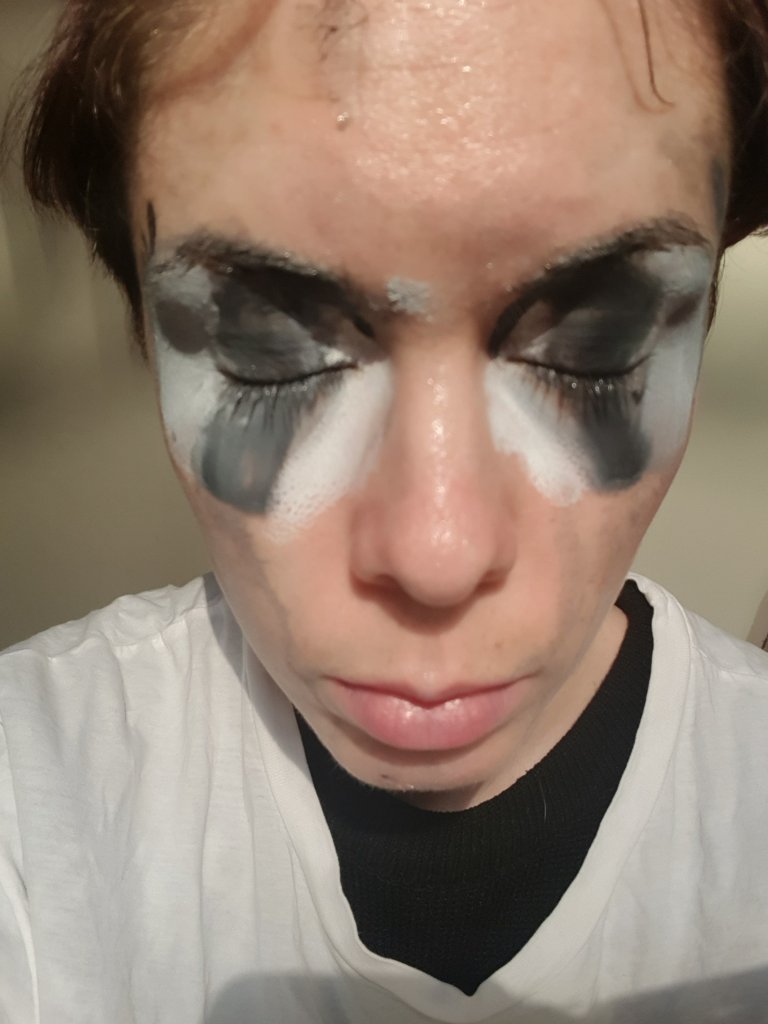
I wanted to show how this mask can be washed away over time whether through use of water which is a very spiritually clensing material.I realised after filming the video that it looked like someone being blessed.Which i realised could be another way of clensing mental weight even if it wasn’t the end result that I was intending.
I patriculary like the unpredictable manner of which the paint travels in droves across my face.As unpredicatable as the action of someone with such a weight on their mind.
I find some comparisons between my work and the work of Bas Jan Arder especially with the way the facepaint has started to look like tears and the way my eyes look red from crying
Sebastian Preschoux is a 35 year old self taught french artist.His work represents the fast industrial rate at which today’s generation disposes of images and cease to ask themselves what the source of these images are.He believes that due to computers you can make everything face paced and flattering which encourages people to ‘fake it’ he has said in an interview ‘‘nothing personal,nothing unique’.He strives to make work that can’t easily be re-produced and is often temporary.His yarn installations come from his graphic works and are from his observations of the sunlight in nature.His recent graphic works are created using ink and based on spirographs and thread tensions which he also uses acrylic paint for.
He also enjoys working in nature as there is no one to disturb him and finds tree’s great to work with as they are a ‘very solid’ construction.His yarn installations work well in these environments as they have a ‘geometric climate’ in an environment which has absolutely nothing graphic about it to begin with.
Elsa Hildegard Baroness von Freytag-loringhoven
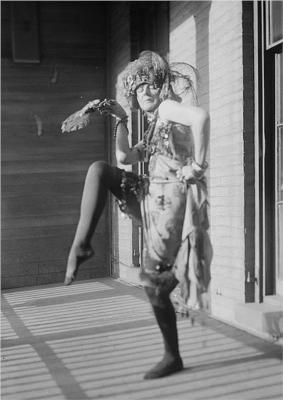
Elsa Hildegard Baroness von Freytag-Loringhoven was born 12th July 1874 and died 15th Dec 1927 She was a German avant-garde,Dadaist artist and poet who worked for several years in Greenwich Village New York. photo Loringhoven was born in Germany, to Adolf Plötz, a mason, and Ida Marie Kleist. Her relationship with her father was temperamental—she emphasized how controlling he was in the family, as well as how cruel, yet big-hearted he was.In her art, she related the ways that political structures promote masculine authority in family settings, maintaining the state’s patriarchal societal order.Her discontent with her father’s masculine control may have fostered her anti-patriarchal activist approach to life. On the other hand, the relationship that she had with her mother was full of admiration—her mother’s craft involving the repurposing of found objects could have spawned Freytag-Loringhoven’s utilization of street debris/found objects in her own artworks Photo In New York, the Baroness also worked on assemblage, sculptures and paintings, creating art out of the rubbish and refuse she collected from the streets. The Baroness was known to construct elaborate costumes from found objects, creating a “kind of living collage” that merged the boundaries between life and art.
The Baroness’ elaborate costumes both criticized and challenged the notions of feminine beauty and economic worth.She adorned herself with objects such as spoons, tin cans, and curtain rings, as well as street debris that she came across.The Baroness’ use of her own body as medium was deliberate, to transform herself into a specific type of spectacle—one that women who complied to the constraints of femininity of the time would be humiliated to embody. By doing so, she controlled and established agency over the visual access to her own nudity, unhinged the presentational expectations of femininity by appearing androgynous, drew upon ideas of women’s selfhood and sexual politics, and provided emphasis on her anti-consumerism and anti-aestheticism outlooks.She included her body’s smells, perceived imperfections, and leakages in her body art, encompassing Irrational Modernism.The Baroness’ body art was not only a sculpture and living collage, but also a form of dadaist performance art and activism.
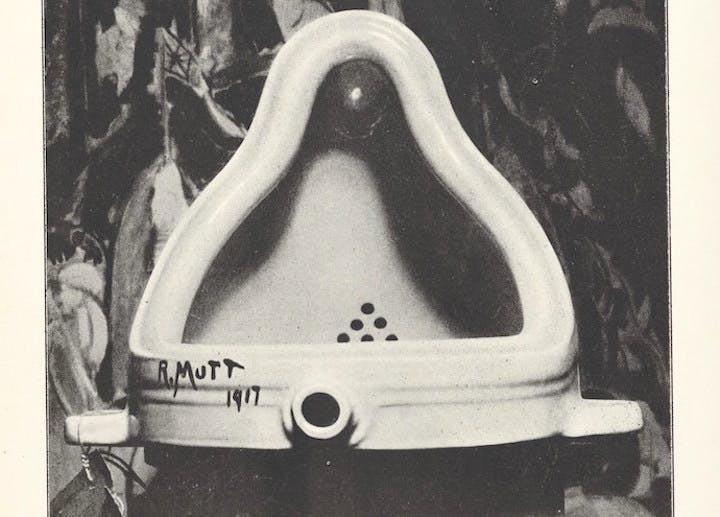
It is thought that ‘Fountain’ (1917) by Marcel Duchamp is also connected to the Baroness
Yves Klein
Yves Klein was born 28 April 1928 and died 6th June 1962 he was a French artist and an important figure in post-war European art. He was a leading member of the French artistic movement of Nouveau realisme founded in 1960 by art critic Pierre Restany. Klein was a pioneer in the development of performance art, and is seen as an inspiration to and as a forerunner of minimal art, as well as pop art.
Anthropometry of the Blue Period (ANT 82) (1960), Pure pigment and synthetic resin on paper laid down on canvas
Klein was born in Nice, in the Alpes-Maritimes department of France. His parents, Fred Klein and Marie Raymond were both painters. His father painted in a loose post impressionist style, while his mother was a leading figure in Art Informel, and held regular soirées with other leading practitioners of this Parisian abstract movement. Klein received no formal training in art, but his parents were both painters who exposed him to different styles. His father was a figurative style painter, while his mother had an interest in abstract expressionism. From 1942 to 1946, Klein studied at the École Nationale de la Marine Marchande and the École Nationale des Langues Orientales. At this time, he became friends with Arman (Armand Fernandez) and Claude Pascal and started to paint. Photo Unaware of the importance of the Nouveau Réalisme movement until the 1990s, New York critics of Klein’s time tried to classify him as neo-dada and other critics, such as Thomas McEvilley in an essay submitted to Artforum in 1982, classified Klein as an early, though enigmatic, postmodernist.
Bruce Nauman
Schaulager
Bruce Nauman was (born December 6, 1941 in Fort Wayne Indiana) and is an American artist. His practice spans a broad range of media including sculpture, photography, neon, video, drawing, printmaking, and performance. Nauman lives near Galisteo,New Mexico.
Nauman studied mathematics and physics at the University of Wisconsin-Madison and art with William T Wiley and Robert Arneson at the University of California.. In 1964 he gave up painting to dedicate himself to sculpture, performance and cinema collaborations with William Allan and Robert Nelson. He worked as an assistant to Wayne Thiebaud . Upon graduation, he taught at the San Francisco Art Institute and at the University of California at Irvine.Confronted with “What to do?” in his studio soon after graduating, Nauman had the simple but profound realization that “If I was an artist and I was in the studio, then whatever I was doing in the studio must be art. At this point art became more of an activity and less of a product.Nauman set up a studio in a former grocery shop and then in a sublet from his university tutor. These two locations provided the setting for a series of performed actions which he captured in real time, on a fixed camera, over the 10-minute duration of a 16mm film reel.Between 1966 and 1970 he made several videos, in which he used his body to explore the potentials of art and the role of the artist, and to investigate psychological states and behavioural codes.
Much of his work is characterized by an interest in language, often manifesting itself as visual puns
Much of his work is characterized by an interest in language, often manifesting itself as visual puns
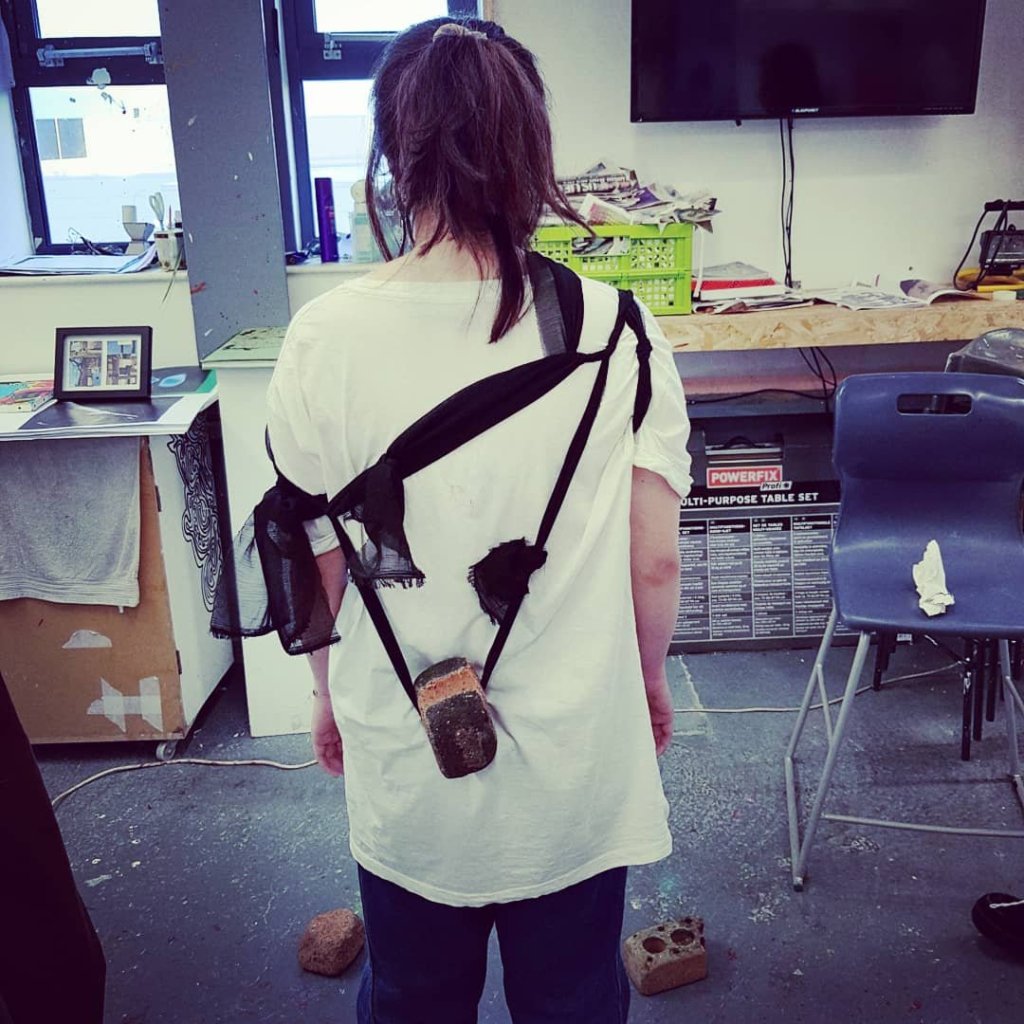
We were asked to continue our ideas in a conceptual project,I decided to look at what worked and what didn’t work from the 3D project.Some things that were mentioned during the crits were to look more at weight.So I decided to focus on issues that can weigh on the mind and how it can effect the mind and body by continueing to use bricks.
I felt that it was important to document the making process as there was something interesting and therapeutic not only with the wrapping and binding process but to watch it too.
I decided that it was important to use somebody who wasn’t me as the model as I was worried that it would be hard to communicate my ideas esactly how I wanted them.
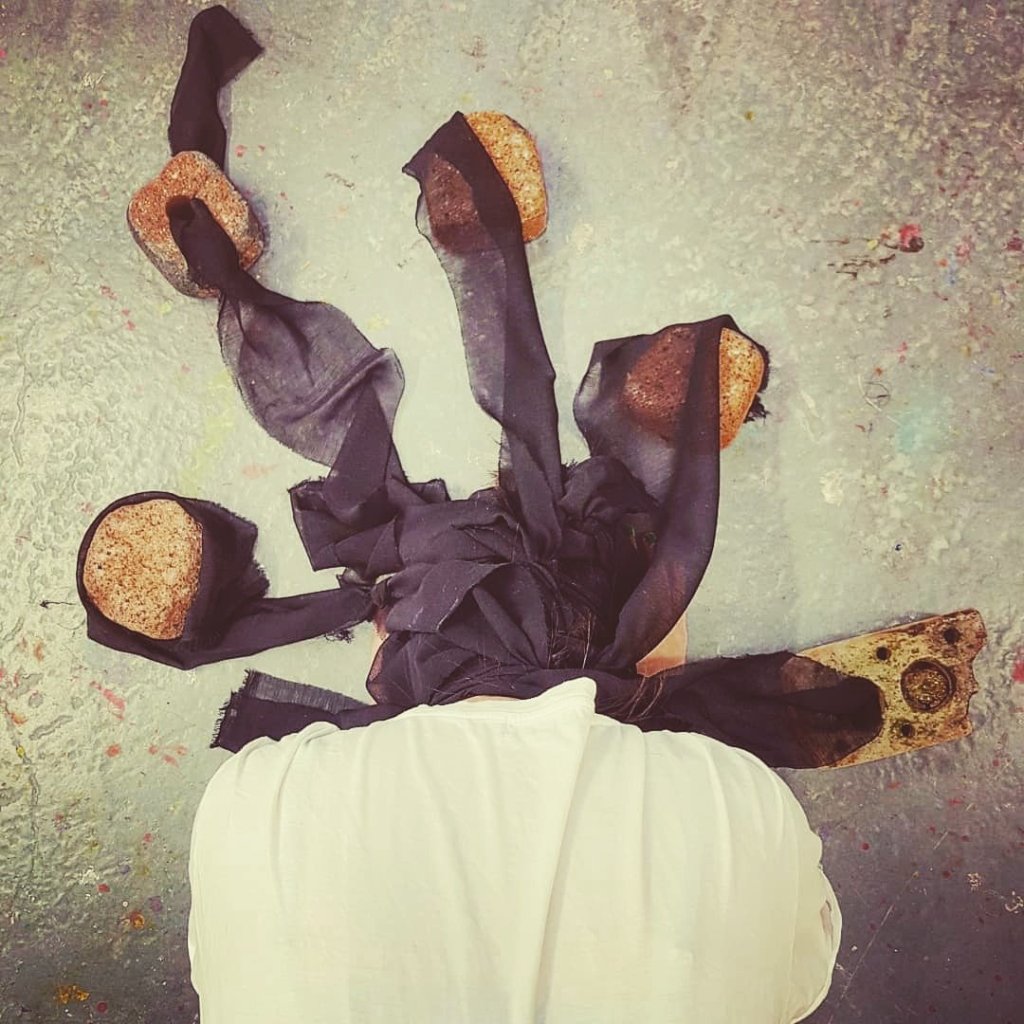
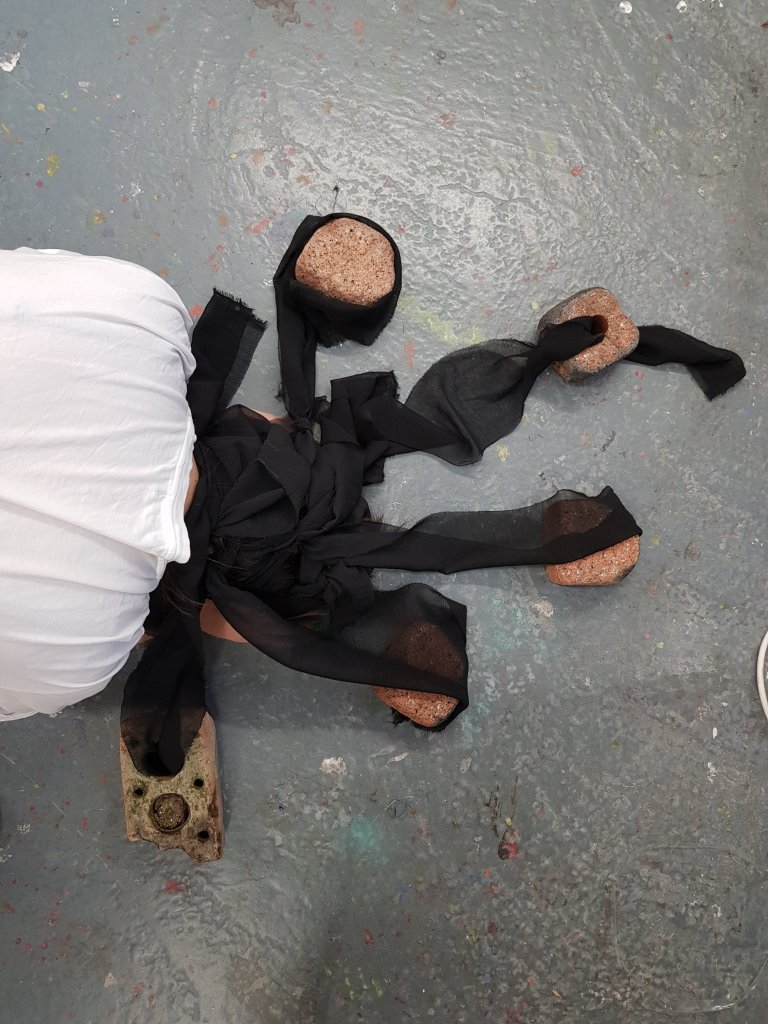
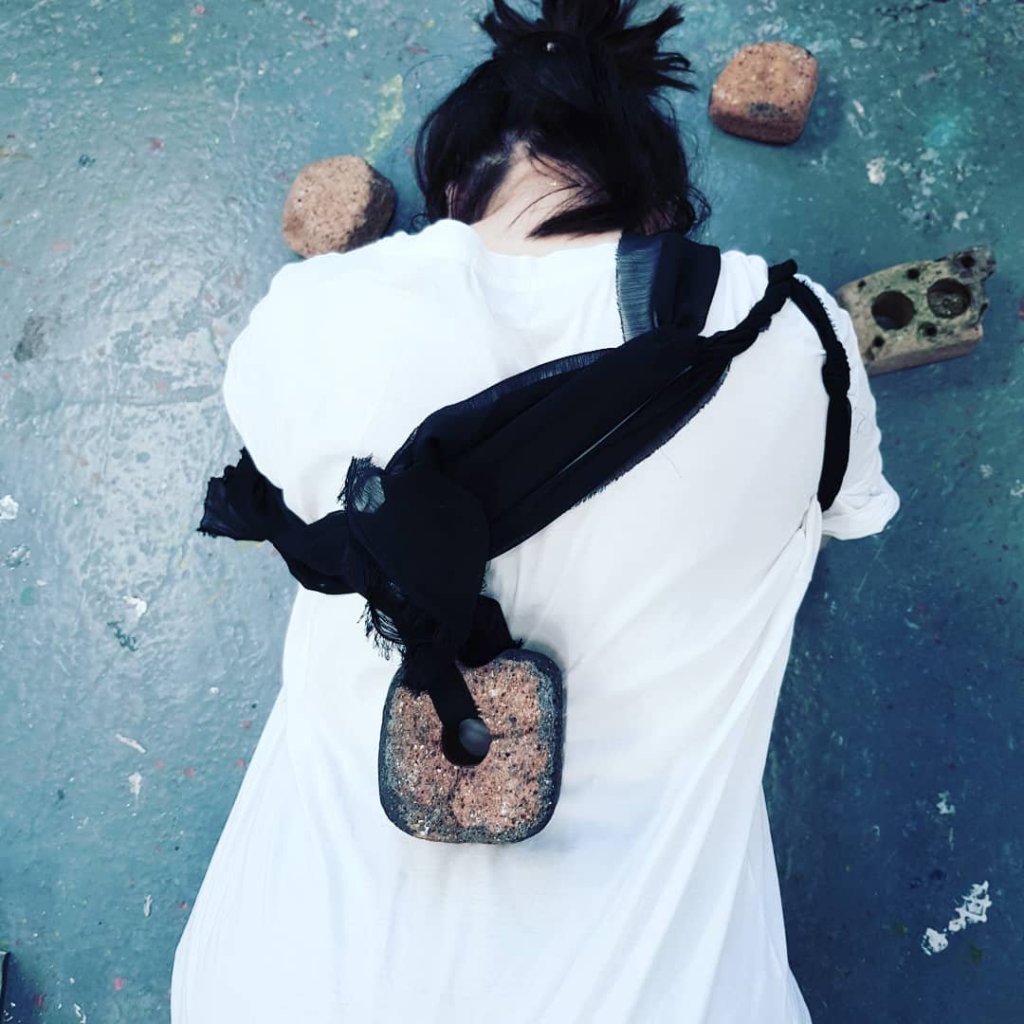
I also left the half circle of bricks around the model after I had created the headpiece.It looked aesthetically pleasing and yet it had some kind of ritualistic feel to it.I suppose a ritual is something that we do over and over again and carrying our mental weight is something most of us do day in day out before that ritual is broken with whatever helps or heals it.
I felt that this development was really sucessful and created some strong images.My favourite being the head piece.It didn’t turn out how I has imagined in my minds eye but better infact.I love the surreal quality to it and how the voile interweaves with each other.I think it has the feel of a painting about the image.
Another thing I would like to continue to develop is the facepaint.As I felt that it was sucessful but I didn’t take it any further.





 Heather's blog